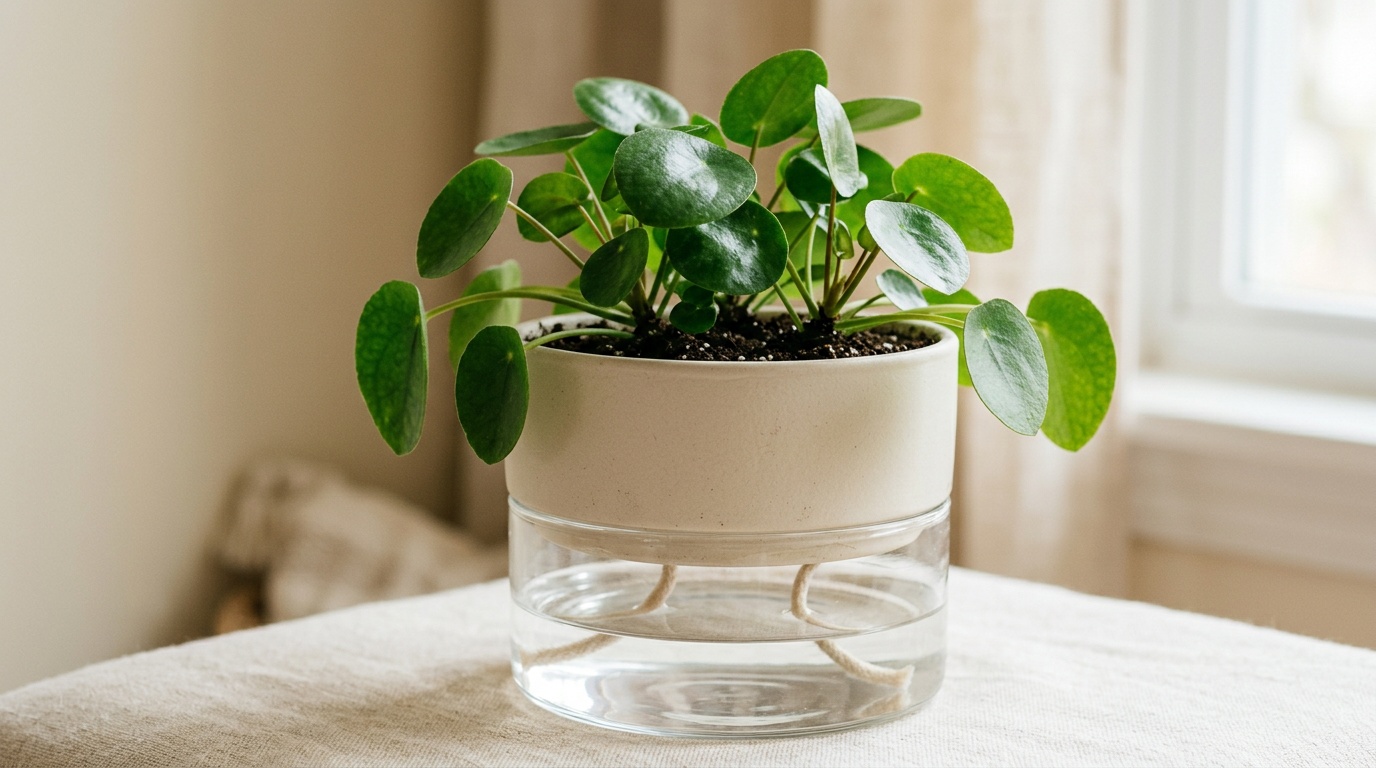
Do Self-Watering Pots Actually Work? I've Been Using Three for Six Months
Quick answer
Self-watering pots work well for moisture-loving plants like pothos, peace lilies, and herbs that drink consistently. They tend to cause problems for succulents, cacti, or anything that needs to dry out between waterings. The right plant makes all the difference — they're a good tool, not a universal solution.
What a Self-Watering Pot Actually Does (Because the Name Is a Little Misleading)
They don’t water themselves, exactly. A self-watering pot has a reservoir built into the bottom, separated from the soil by a platform or wicking system. The plant draws water up from the reservoir as it needs it — through the roots or through a wicking material, depending on the design. You fill the reservoir every week or two instead of watering from the top.
That sounds pretty great on paper. And honestly, for the right plant, it kind of is.
But the marketing tends to leave out the part where keeping soil in near-constant contact with a water source is genuinely bad for a lot of common houseplants. I wanted to find out for myself, so I picked up three different self-watering pots and spent the last six months testing them with plants I actually have at home.
Here’s what happened.
How I Set Up the Test
I used three pots from different brands at different price points — a basic plastic one around $15, a mid-range ceramic-style one around $30, and one marketed specifically for herbs. I planted:
- A pothos cutting that had already rooted in water
- A peace lily that had been struggling in a spot with inconsistent watering
- A small cluster of kitchen herbs (basil and parsley)
I also tried, briefly, moving a drought-tolerant plant into one. More on that in a minute.
I kept notes on how often I was refilling the reservoir, how the plants looked week to week, and whether I was actually spending less time thinking about watering. I didn’t use any special soil mix — just a standard potting mix, because that’s what most people are going to use.
The Milestone Nobody Mentions: Roots Reaching the Reservoir
Here’s something I didn’t see in any product description: for the first few weeks, nothing really changes. The plant is still relying on whatever moisture is in the soil itself, and you’re still top-watering occasionally to keep things going while the roots grow downward.
The self-watering system doesn’t really kick in properly until the roots reach the reservoir level — or at least get close enough that the wicking is effective. For my pothos, that took about three weeks. For the peace lily, closer to five.
Before that milestone, you can actually underwater your plant if you assume the reservoir is handling everything from day one. This is probably why some people try self-watering pots and think they don’t work — they stopped top-watering too soon.
Once the roots connected, though? The difference was noticeable. The pothos took off. The peace lily stopped drooping between waterings, which had been its whole thing before.
What Worked Really Well
Pothos: This was the clear winner. Pothos are pretty forgiving, they drink steadily, and they don’t need dry periods to be happy. The reservoir lasted about 10 days before I needed to refill it, and the plant just grew consistently without me thinking about it much. Exactly what you’d want.
Peace lily: Also a good fit. Peace lilies like consistent moisture and they’re dramatic about it when they don’t get it — they droop very visibly when they’re thirsty. That stopped happening once the roots reached the reservoir. The leaves stayed upright and the plant looked healthier overall.
Herbs (basil and parsley): The herb pot worked well during the warmer months when the basil was drinking a lot. Basil especially seems to do well with this setup — it’s thirsty, grows fast, and does not love drying out completely. Parsley was fine too. The one thing I noticed is that the reservoir needed filling more often in summer, sometimes every five or six days, which means you still need to pay attention.
What Did Not Work
I knew going in that succulents and cacti would be a bad idea, so I didn’t test those. But I did try moving a snake plant into one of the pots mid-test, just to see.
It was not good.
Snake plants want to dry out between waterings — not just the top inch, but fairly thoroughly. Two weeks in, I could see the lower leaves starting to look soft and a little yellowish at the base. I moved it back to a regular pot pretty quickly. The consistently moist environment was doing exactly what overwatering does.
If you’ve ever dealt with a plant that looked droopy and limp even though the soil was wet, that’s the same problem. It’s not always obvious because the soil looks fine — the issue is at the roots. If that sounds familiar, My Plant Is Wilting — Is It Thirsty or Drowning? (How to Actually Tell) breaks down exactly how to tell the difference.
Any plant that likes to dry out between waterings is going to struggle in a self-watering pot. That includes:
- Succulents and cacti
- Snake plants
- ZZ plants
- Most drought-tolerant tropicals
- Monsteras (more on that below)
Are Self-Watering Pots Good for Monsteras?
People ask this one a lot, so I want to address it directly: probably not the best fit.
Monsteras like to mostly dry out between waterings — not bone dry, but the top couple inches of soil should be dry before you water again. A self-watering pot keeps things consistently moist, which over time creates conditions where root rot can develop. Monsteras are also plants that get big, and once they’re big they’re in large pots, and large self-watering pots are expensive and harder to manage.
If you have a monstera and you keep forgetting to water it, I’d honestly rather you pick up a Fpxnb Soil Moisture Meter and check the soil before watering. It takes the guesswork out of it without locking you into a system that keeps roots constantly wet. You just stick it in the soil and it tells you if the plant actually needs water. I use mine all the time, especially for plants that don’t have obvious “I’m thirsty” signals.
The Drainage Question
One thing worth understanding about self-watering pots: they don’t drain in the traditional sense. The reservoir holds water below the soil, and excess is meant to stay there rather than flow out the bottom. This is different from a regular pot with drainage holes, where water moves through the soil and out.
That’s fine when the system is working as intended. But if you’re also top-watering while the reservoir is full, or if the plant isn’t drinking much, you can end up with waterlogged soil and no way for it to escape.
If you want to understand why drainage matters as much as it does for root health, Why Drainage Holes Actually Matter (And What Happens to Roots Without Them) goes deep on that. It’s worth reading before you decide what pot to put any plant in.
How Often You Actually Need to Refill the Reservoir
This varies a lot by plant, pot size, season, and your home environment. Here’s roughly what I saw over six months:
| Plant | Season | Reservoir Refill Frequency |
|---|---|---|
| Pothos | Winter | Every 10–14 days |
| Pothos | Spring | Every 7–10 days |
| Peace lily | Winter | Every 12–14 days |
| Peace lily | Spring | Every 8–10 days |
| Basil | Spring/Summer | Every 5–7 days |
| Parsley | Spring | Every 7–10 days |
The herbs needed the most attention in summer. Everything slowed down in winter, which makes sense — plants drink less when they’re not actively growing.
The point is, you’re not completely off the hook for paying attention. You still need to check the reservoir. For me that’s easier than guessing whether the soil is dry enough to water, but it’s not a set-it-and-forget-it situation.
So, Do They Work?
Yeah, they do — for the right plants.
If you have moisture-loving plants that drink consistently, or if you tend to forget to water and your pothos keeps suffering for it, a self-watering pot is genuinely useful. It’s not magic, but it does make consistent moisture easier to maintain without daily checking.
If you have plants that need to dry out between waterings, skip it. The constantly moist environment isn’t a feature for those plants, it’s a problem.
And if you’re someone who forgets to water sometimes, a self-watering pot might be a good fit — but so might a soil moisture meter, which works for every plant instead of just the moisture-lovers. Both are tools. Neither one is the only way to go.
The thing with plants is that each one has its own needs, its own timeline, its own preferences. A good tool is one that fits what your specific plant actually needs. Self-watering pots fit some of them really well. Just not all of them.
FAQ
Are self-watering pots good for houseplants? They can be, but it depends on the plant. Self-watering pots work well for moisture-loving houseplants like pothos, peace lilies, and herbs. They tend to cause problems for succulents, cacti, snake plants, or anything that needs to fully dry out between waterings.
What plants do well in self-watering pots? Plants that thrive in self-watering pots are ones that drink consistently and like evenly moist soil — pothos, peace lilies, basil, parsley, and similar herbs are good candidates. Plants that need dry periods between waterings are generally not a good fit.
Can you overwater a plant in a self-watering pot? Yes, in a way. The reservoir keeps the soil consistently moist, which can essentially mimic constant overwatering for plants that need to dry out. Root rot is a real risk if you put the wrong plant in one. The pot doesn’t overwater in the traditional sense, but it can create conditions that lead to the same result.
Are self-watering pots good for monsteras? Probably not the best choice. Monsteras like to have their soil dry out a bit between waterings, and the consistently moist conditions in a self-watering pot can lead to root rot over time. A regular pot with good drainage and a consistent watering routine works better for them.
Frequently asked questions
Are self-watering pots good for houseplants?
They can be, but it depends on the plant. Self-watering pots work well for moisture-loving houseplants like pothos, peace lilies, and herbs. They tend to cause problems for succulents, cacti, snake plants, or anything that needs to fully dry out between waterings.
What plants do well in self-watering pots?
Plants that thrive in self-watering pots are ones that drink consistently and like evenly moist soil — pothos, peace lilies, basil, parsley, and similar herbs are good candidates. Plants that need dry periods between waterings are generally not a good fit.
Can you overwater a plant in a self-watering pot?
Yes, in a way. The reservoir keeps the soil consistently moist, which can essentially mimic constant overwatering for plants that need to dry out. Root rot is a real risk if you put the wrong plant in one. The pot doesn't overwater in the traditional sense, but it can create conditions that lead to the same result.
Are self-watering pots good for monsteras?
Probably not the best choice. Monsteras like to have their soil dry out a bit between waterings, and the consistently moist conditions in a self-watering pot can lead to root rot over time. A regular pot with good drainage and a consistent watering routine works better for them.