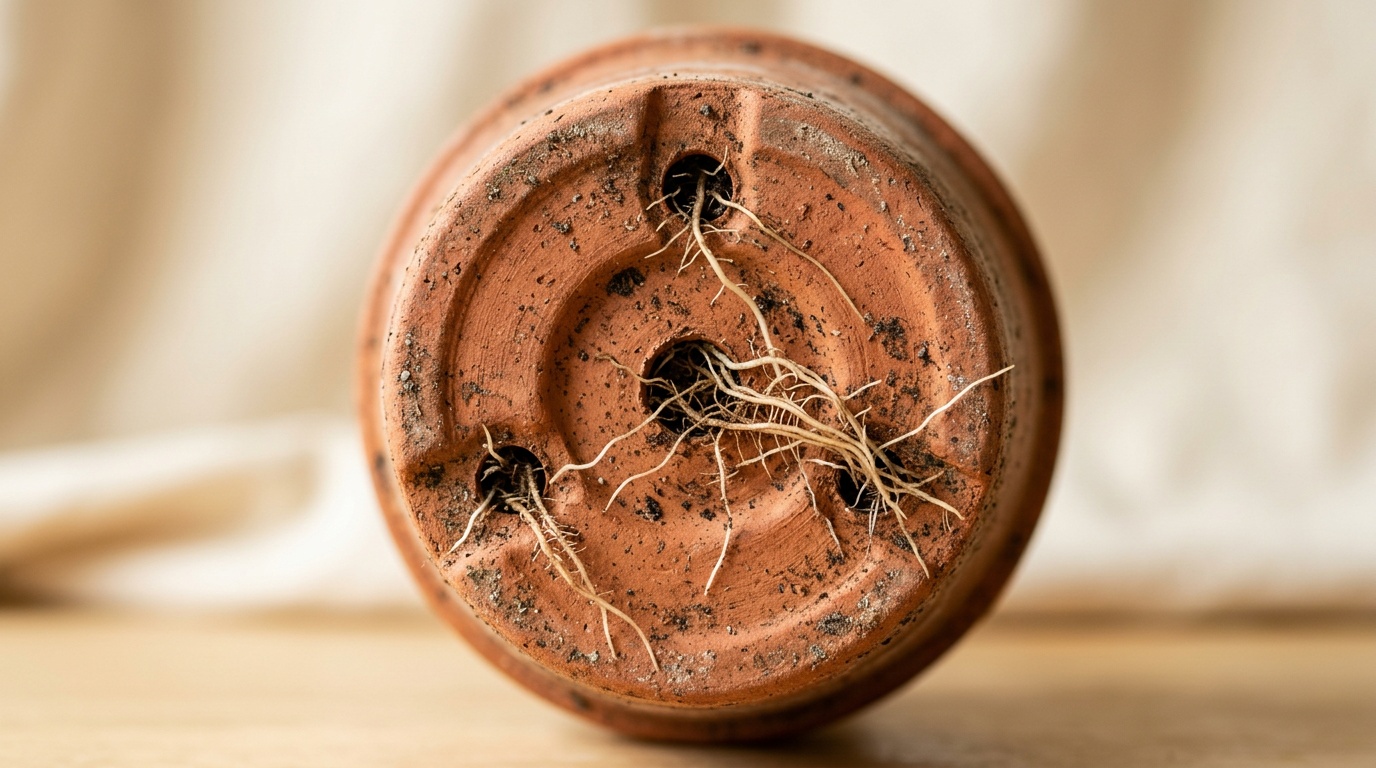
Why Drainage Holes Actually Matter (And What Happens to Roots Without Them)
Quick answer
Most plants need pots with drainage holes because water accumulates at the bottom of any container and suffocates roots. Adding rocks doesn't fix this — it raises the saturated zone higher into the soil. For decorative pots without holes, use a nursery pot inside and remove it to water.
Roots need two things to stay healthy: moisture and air. A pot without drainage holes gives them one at the expense of the other. Water goes in, doesn’t come out, collects at the bottom, and the roots sitting in that zone slowly suffocate. It’s not dramatic — it happens gradually — but by the time you notice the plant struggling, the root damage is usually already done. And if you’ve been adding a layer of rocks to the bottom thinking that fixes it, that’s actually part of the problem.
What a Perched Water Table Is (And Why It Lives in Your Pot)
Here’s the thing about how water moves through soil: it doesn’t drain just because there’s empty space below it. Water moves downward through soil by gravity, but it won’t drop into a coarser material underneath — like rocks, gravel, or bark chips — until the layer above is completely saturated. That point where water stops and hangs is called the perched water table.
Every pot has one, even pots with drainage holes. It’s just physics. But in a pot with a drainage hole, that saturated zone sits at the very bottom and drains out as soon as it builds up enough to escape. In a pot without a drainage hole, that water has nowhere to go. It just sits there.
Now here’s where the rock layer thing goes wrong. The idea is that rocks at the bottom create a drainage layer so excess water moves away from the roots. That’s not what happens. What actually happens is that the rocks create a coarser boundary layer. Water moving down through the soil hits that boundary and stops — it won’t jump across the air gaps between rocks until the soil above is completely saturated. So you haven’t moved the wet zone away from the roots. You’ve raised it higher up into the pot, closer to where the roots actually are. The soggy zone is now bigger, not smaller.
This isn’t a fringe opinion. It’s been studied. Horticulturists and soil scientists have looked at this, and the rock layer myth consistently makes drainage worse, not better.
What Happens to Roots Sitting in Saturated Soil
Plant roots need oxygen. When soil stays waterlogged, the air pockets in the soil fill with water and the roots can’t get the oxygen they need. They start to die. And once roots start dying, they become easy targets for fungal and bacterial pathogens — that’s what root rot actually is.
It doesn’t always look like overwatering at first. Sometimes the plant wilts even though the soil is wet, which is confusing. You’d think a wilting plant needs water. But if the roots have been damaged by sitting in soggy soil, they’ve lost their ability to move water up to the leaves. So the plant looks thirsty even when it’s essentially drowning. If you’ve seen that and weren’t sure what was going on, My Plant Is Wilting — Is It Thirsty or Drowning? (How to Actually Tell) breaks that down pretty clearly.
By the time you see brown mushy stems, yellow leaves dropping off, or that distinctive smell of wet rot, things have usually progressed. It’s not always a death sentence — Root Rot Isn’t Always a Death Sentence — Here’s How to Save the Plant walks through what you can actually do — but it’s a lot easier to prevent than to fix.
Which Pots Are Better: Clay, Plastic, or Ceramic?
Drainage hole aside, the pot material does matter, especially for plants that are prone to overwatering issues.
| Pot Type | Drainage | Evaporation | Best For |
|---|---|---|---|
| Terra cotta / clay | Needs hole drilled or already has one | High — pulls moisture through walls | Succulents, cacti, Mediterranean herbs |
| Plastic nursery pot | Almost always has holes | Low — retains moisture longer | Tropicals, ferns, moisture-loving plants |
| Glazed ceramic | Usually no hole | Low — similar to plastic | Decorative use with a nursery pot inside |
| Fabric grow bag | Drains from everywhere | High — air prunes roots too | Tomatoes, larger plants, outdoor use |
Clay pots are genuinely useful for plants that like to dry out between waterings. The terra cotta pulls moisture out of the soil through the walls, which helps prevent that perched water zone from hanging around too long. For succulents especially, a clay pot with a drainage hole is hard to beat.
Plastic is fine for plants that like consistent moisture — tropicals, most ferns, peace lilies. They hold water longer, which isn’t a bad thing for those plants. Just make sure the hole is actually there and isn’t blocked.
The Practical Answer for Pots Without Holes
Decorative pots are usually the problem. They’re beautiful, they’re designed to look good in your space, and a lot of them don’t have drainage holes. You don’t have to give them up.
The easiest solution: use a plastic nursery pot inside the decorative one. Water the plant in the nursery pot (or take it to the sink), let it drain completely, and then set it back inside the decorative pot. The decorative pot acts as a cachepot — it’s just there for looks. No water ever sits in the bottom of the decorative pot against the roots.
If you want to go a step further, you can put a thin layer of LE TAUCI Pot Hole Mesh Pads over the drainage holes in the nursery pot before adding soil. They keep soil from escaping through the holes without blocking drainage — small thing, but it actually helps keep things tidy when you’re moving pots around.
The other option is to drill a drainage hole yourself.
How to Drill Drainage Holes in Ceramic or Glazed Pots
This is more doable than it sounds. You’ll need:
- A diamond-tipped drill bit (not a regular bit — those won’t work on ceramic or glazed surfaces)
- Masking tape or painter’s tape
- A spray bottle with water or a slow drip setup to keep the bit cool
- A drill set to low speed
Put tape over the spot where you’re drilling. It gives the bit something to grip instead of sliding around on the smooth surface. Start slow, keep the bit wet the whole time — heat is what cracks ceramic — and don’t push hard. Let the bit do the work. For most standard glazed ceramic pots, this takes a few minutes and works well. Terra cotta is even easier.
Heavily fired stoneware or very thick ceramic can sometimes crack no matter what you do. If a pot is expensive or sentimental, the nursery pot method is the safer call.
Are There Plants That Don’t Need Drainage Holes?
Yes, some. A few worth knowing:
Aquatic and semi-aquatic plants — things like water hyacinth, lotus, or papyrus that actually grow in water don’t need drainage the way typical houseplants do.
Lucky bamboo in water — technically not bamboo at all, and it grows fine with its roots submerged as long as you change the water regularly.
Semi-hydroponics setups — some people grow plants like pothos, hoyas, or monsteras in LECA (lightweight expanded clay aggregate) with a reservoir of water at the bottom. In this setup, the plant roots grow down to the water line but the upper roots stay in air. It’s a specific system that works differently from regular soil. It’s not the same as just dumping a tropical into a pot without a hole and hoping for the best.
For the vast majority of houseplants — your pothos, your peace lily, your snake plant, your fiddle leaf fig — drainage holes matter.
The Soil You Use Changes This Equation Too
Dense, heavy soil makes drainage problems worse. If you’re using straight store-bought potting mix, it often holds more water than most houseplants actually need. A well-draining mix helps the soil dry out more evenly between waterings instead of staying wet at the core for days.
The mix I’ve landed on for most of my plants is built around coco husk fiber and Halatool Natural Sphagnum Moss as the base, with orchid bark for air pockets and a little Char Bliss Organic Biochar mixed in. The biochar helps with drainage and also keeps the soil from compacting over time, which is something store-bought mixes tend to do after a few months. Good soil doesn’t replace the need for a drainage hole, but it does make the whole system work better. There’s more on why store-bought mixes can be a problem in Why Store-Bought Potting Mix Is Slowly Killing Your Tropicals.
One More Helpful Thing: Know When the Soil Is Actually Dry
Even with drainage holes and good soil, it’s easy to misjudge when a plant needs water. A soil moisture meter takes the guesswork out of it. You stick it in the soil, and it tells you what’s actually happening a few inches down — not just on the surface, which dries out faster. I use a Fpxnb Soil Moisture Meter and honestly it’s one of the more consistently useful tools I have. Especially helpful if you’re newer to plants and still figuring out how fast different pots dry out.
The short version of all of this: get a pot with a drainage hole, skip the rock layer, use a nursery pot inside your pretty decorative pots, and don’t rely on the surface of the soil to tell you whether it’s time to water. Your roots will thank you.
Frequently asked questions
Do indoor plant pots need drainage holes?
Most do, yes. Without a drainage hole, water collects at the bottom of the pot and has nowhere to go. That sitting water suffocates roots and leads to root rot pretty quickly. There are a few exceptions — some aquatic plants and setups using semi-hydroponics — but for the majority of houseplants, a drainage hole isn't optional.
Does putting rocks at the bottom of a pot help drainage?
No, and this is one of those things that sounds logical but doesn't actually work. Water moves through soil by gravity, but it won't drop into a coarser layer below until the soil above is completely saturated. That zone of soggy, waterlogged soil — called the perched water table — sits right at the soil-rock boundary. Adding rocks just raises that saturated zone higher up into the root system. It makes the problem worse, not better.
Can plants grow in pots without drainage holes?
Some can. Aquatic plants, lucky bamboo in water, and plants grown in semi-hydroponic setups don't need drainage the same way. But for most tropical houseplants, succulents, or herbs, a pot without drainage is going to cause problems eventually. The best practical solution is to use a nursery pot with drainage holes inside your decorative pot.
How do you drill drainage holes in a ceramic pot?
You'll need a diamond-tipped drill bit — regular bits won't cut it. Mark your spot with tape (it keeps the bit from sliding), keep the bit wet while you drill to prevent cracking, and use low speed with gentle pressure. Don't rush it. Most ceramic pots can be drilled successfully with patience. Terra cotta is usually easier than glazed ceramic.