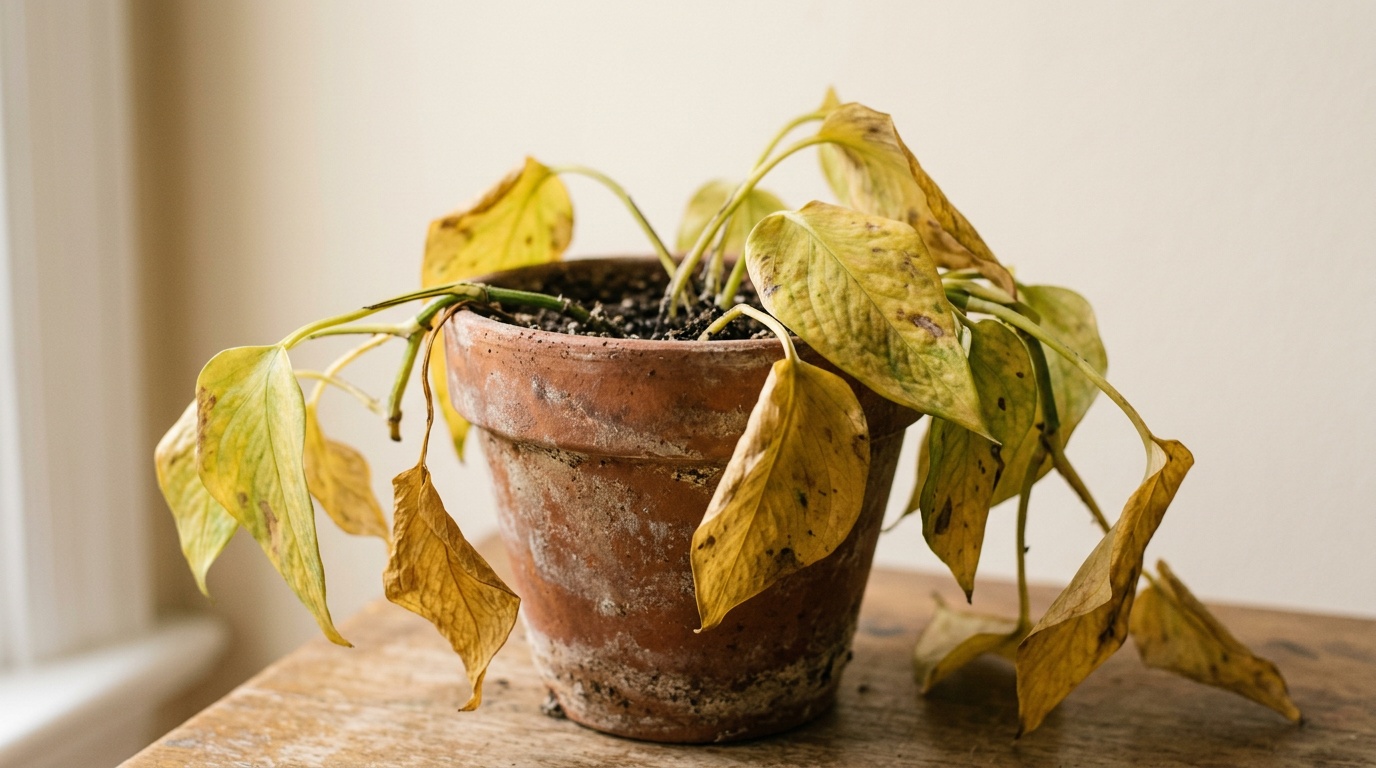
My Plant Is Wilting — Is It Thirsty or Drowning? (How to Actually Tell)
Quick answer
A wilting plant can be overwatered or underwatered — the leaves alone won't tell you which. Check the soil first: dry means it needs water, wet means it may be drowning. If the soil is wet and the plant still droops, check the roots for soft brown rot. That's your real answer.
Here’s the trap that gets almost everyone at some point: your plant is drooping, the leaves look sad and limp, and your first instinct is to grab the watering can. Sometimes that’s exactly right. But sometimes the plant is already sitting in soggy soil, the roots are starting to rot, and adding more water is the worst thing you could do. The leaves look the same either way. That’s the problem. You can’t reliably diagnose a wilting plant by looking at the leaves alone — you have to go a little deeper.
Why Wilting Doesn’t Tell You What You Think It Does
When a plant doesn’t have enough water, it wilts. The cells lose pressure, the stems go soft, the leaves droop. That makes sense.
But here’s the part that surprises people: a plant with too much water wilts for the same reason — the cells lose pressure and the leaves droop. The difference is why the water isn’t getting where it needs to go.
With underwatering, there’s simply not enough water in the soil for the roots to take up.
With overwatering, the roots have been sitting in wet soil long enough that they’ve started to rot. Rotted roots can’t absorb water. So the plant is surrounded by moisture and still dying of thirst, in a way. It looks desperate. It looks like it needs a drink. And if you give it one, you’re making the rot worse.
This is why so many people end up accidentally killing their plants by overwatering — they see the wilt, they water, the plant gets worse, they water more. It’s a cycle that’s easy to fall into when you’re going by looks alone.
The Right Way to Diagnose: Start With the Soil
Before you do anything else, check the soil. Not just the surface — stick your finger down into it at least two inches. What does it feel like?
If it’s dry: The plant is probably underwatered. Give it a thorough watering, let it drain completely, and see how it looks in an hour or two. Most plants perk up pretty quickly once they get water.
If it’s still damp or wet: Stop. Do not water. The problem is almost certainly too much moisture, not too little. Move on to checking the roots.
If you want to take the guesswork out of this completely, a Fpxnb Soil Moisture Meter is genuinely useful here. You press the probe into the soil and get a reading — dry, moist, or wet — without having to interpret what your finger is telling you. I find it especially helpful for plants in bigger pots where the surface might feel dry but the bottom of the pot is still soaked. It removes a lot of ambiguity. (If you’re wondering whether the inexpensive meters are actually worth it, I’m putting together a full breakdown in Soil Moisture Meters: Do the Cheap Ones Actually Work?.)
A Simple Two-Question Decision Tree
When your plant is wilting, work through these two questions before reaching for the watering can:
Question 1: Is the soil dry?
- Yes → Water it thoroughly, let it drain, and check back in a few hours.
- No → Don’t water. Move to question 2.
Question 2: Is the soil wet and the plant still wilting?
- Yes → Check the roots for rot (see below).
- The soil is just slightly damp → Wait. Check again in a day. Some plants wilt temporarily from heat or stress and bounce back without any intervention.
That’s really it. Two questions, and you’ve already ruled out half the possibilities.
How to Check the Roots
If the soil is wet and the plant is still drooping, you need to look at the roots. This sounds more intimidating than it is.
Gently tip the plant out of its pot. You don’t have to repot it — you’re just taking a look. Healthy roots are white or light tan and feel firm. Rotted roots are brown or black, feel soft and mushy, and sometimes have a smell to them.
Here’s what you’re looking at:
| Root Appearance | What It Means |
|---|---|
| White or tan, firm | Healthy — overwatering may be early or resolved |
| Light brown, slightly soft | Early stress — improve drainage, reduce watering |
| Dark brown or black, mushy | Root rot — needs treatment |
| Slimy with odor | Advanced rot — act quickly |
If you find rot, it doesn’t automatically mean the plant is done. Catching it early and treating it right can save a lot of plants that look pretty bad. I go into the full process in Root Rot Isn’t Always a Death Sentence — Here’s How to Save the Plant.
What “False Wilt” Looks Like
This is worth naming directly because it’s confusing the first time you see it: an overwatered plant can look exactly like a plant that’s desperately thirsty. Drooping, soft stems, limp leaves that look almost dehydrated. It’s sometimes called a false wilt, and it’s exactly what it sounds like — the visual symptom is pointing you toward the wrong solution.
The other thing that adds to the confusion is that overwatered plants often get yellow leaves too, which most people associate with underwatering. Yellow leaves with dry soil usually do mean the plant needs water. But yellow leaves with wet soil are a sign of stress from too much moisture, poor drainage, or early root rot.
So if your plant has yellow leaves, check the soil before you assume it’s thirsty. Wet soil plus yellow leaves is a different problem than dry soil plus yellow leaves, even though they can look similar.
What Each Problem Usually Looks Like Side by Side
This isn’t foolproof — some plants show symptoms differently — but here’s a general comparison:
Underwatered plants tend to show:
- Dry, pulling-away-from-pot-edges soil
- Leaves that are crispy or dry at the tips or edges
- Lighter pot weight (dry soil weighs less)
- Wilting that improves within hours of watering
Overwatered plants tend to show:
- Wet or consistently damp soil
- Soft, mushy stems near the soil line
- Yellowing leaves (especially lower leaves)
- Wilting that doesn’t improve after watering
- Possible mold or fungus gnats on the soil surface
The pot weight trick is actually a pretty handy low-tech method once you get used to it. Lift the pot right after watering so you know what “heavy and wet” feels like, then lift it again a few days later. When it’s noticeably lighter, it’s usually time to water. It takes a little practice but becomes pretty intuitive.
Pot Choice and Drainage Matter More Than People Realize
One thing that makes overwatering more likely isn’t always how much you water — it’s whether the water has anywhere to go. Most plants need pots with drainage holes. Without drainage, water collects at the bottom and the roots sit in it.
Clay pots are genuinely better for plants that are prone to overwatering because the material is porous and lets moisture evaporate through the sides. Plastic pots hold moisture longer, which is fine for some plants but can cause problems for others. It’s worth thinking about what kind of pot you’re using alongside how you’re watering.
Pot size also matters. A pot that’s too large for the plant holds a lot of soil that the roots aren’t reaching yet, and that soil stays wet for a long time. Smaller pot, less excess moisture, easier to get the balance right.
The Thing About Watering Schedules
A fixed watering schedule — every Tuesday, or twice a week, or whatever — is really where overwatering problems start. Each plant has its own needs, and those needs change based on the season, the pot, the light it’s getting, and how humid your home is. What works in July might drown the same plant in January when growth slows down.
Checking before you water — with your finger or a moisture meter — is a much better system than any calendar. It sounds simple because it is, but it’s genuinely the shift that makes the biggest difference for most people.
When to Just Wait
Not every wilt is a watering problem. Plants can droop temporarily from heat, from being moved to a new spot, from drafts, or from general stress. If the soil feels fine — not bone dry, not soaking wet — and there’s no other obvious issue, sometimes the right move is just to wait a day and see what happens. Plants that are simply adjusting or stressed often come back on their own.
The urge to do something when a plant looks bad is totally understandable. But checking first and acting second tends to go a lot better than the other way around.
Frequently asked questions
What does an overwatered plant look like?
An overwatered plant can look surprisingly similar to an underwatered one — drooping, limp, or yellowing leaves. The difference is the soil will be wet or still damp, and the roots may be brown and mushy instead of white and firm. Wilting with wet soil is a strong sign of overwatering.
Can a wilting plant be overwatered?
Yes, and this trips up a lot of people. When roots stay wet too long, they start to rot and can no longer move water up into the plant — so the plant wilts even though the soil is soaked. If your plant is drooping but the soil feels wet, don't water it again. Check the roots instead.
How do I tell if my plant needs water or has too much?
Check the soil, not just the leaves. Stick your finger two inches into the soil or use a soil moisture meter. If it's dry, the plant likely needs water. If it's still wet and the plant is wilting anyway, you're probably dealing with overwatering or root rot — adding more water will make things worse.
Why are my plant's leaves yellow if the soil is dry?
Dry soil with yellow leaves usually means the plant has been underwatered for a while. Prolonged drought stress causes leaves to yellow and drop. Give it a thorough watering, let it drain completely, and check back in a day or two. If it perks up, you had your answer.