Misting Your Plants Probably Isn't Doing What You Think
Quick answer
Misting plants does raise humidity, but only for a few minutes — not long enough to matter for humidity-loving plants. For lasting results, group plants together, use a pebble tray with water, or run a small humidifier near your plants. Those approaches actually change the ambient moisture in the air.
There’s something satisfying about picking up a spray bottle and giving your plants a good mist. It feels attentive. Caring. Like you’re doing something. And look, misting isn’t going to hurt most of your plants — but if you’re doing it because you think it’s raising the humidity around your plant for any meaningful stretch of time, it’s really not. The moisture evaporates in minutes, sometimes faster depending on your home’s airflow and temperature. If you have plants that actually need higher humidity to thrive, a spray bottle is just not going to get you there.
Why misting doesn’t actually raise humidity
When you mist a plant, you’re putting a fine layer of water droplets on its leaves and on the air immediately around it. That does technically raise the relative humidity in that tiny space — for a few minutes. Then it evaporates. The water doesn’t linger long enough to make any real difference to the plant.
Think about it this way: humidity is about how much moisture is consistently in the air. A single misting is kind of like holding a cup of hot coffee under a humidity gauge — the reading goes up, and then it comes right back down. To actually raise the ambient humidity around your plant, you need something that’s releasing moisture continuously, or something that creates a small, sustained microclimate.
That’s not a spray bottle.
When misting can actually cause problems
For most plants, misting is just a neutral act. It doesn’t help, but it doesn’t hurt. That said, there are a few situations where regular misting can work against you.
Plants with fuzzy or textured leaves — African violets are the classic example — really don’t like water sitting on their leaves. The texture traps moisture and it doesn’t evaporate as cleanly, which can lead to spotting or rot. Same idea applies if your plant is sitting in a low-airflow corner: water on the leaves has nowhere to go, and that can invite fungal issues over time.
So if you’ve got something like that, or you’re seeing weird spotting on leaves you’ve been misting regularly, it’s worth reconsidering the habit.
Which plants actually need higher humidity?
Here’s the thing — a lot of plants have a reputation for being humidity-demanding that’s a bit overstated. Most common tropicals are more tolerant of average home humidity than people think. Your pothos, your snake plant, even most philodendrons — they’ll do fine in a normal house.
The plants that genuinely do better with higher humidity are:
- Calatheas and marantas — these are the drama queens of the humidity world. Brown leaf edges are often the first sign they want more moisture in the air.
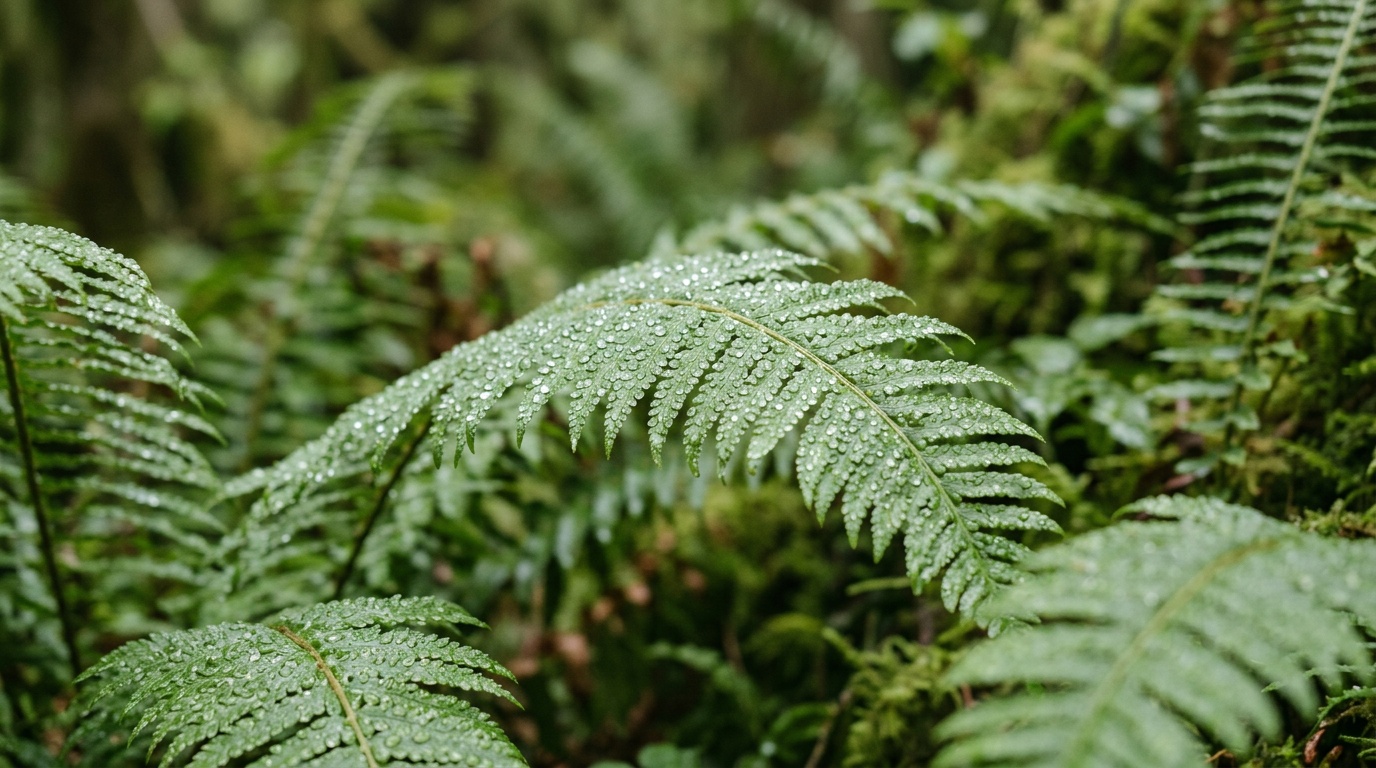
- Ferns — most ferns really do prefer humid conditions. They’re used to growing in shaded, moist environments and a dry living room is a stretch for them.
- Orchids — many orchids, especially phalaenopsis, appreciate some humidity, though they also need airflow, so there’s a balance.
- Air plants (tillandsia) — these actually do absorb some moisture through their leaves, so humidity matters more directly for them than for most.
- Nerve plants (fittonia) — small and sensitive, these will wilt dramatically in low humidity.
On the flip side, succulents, cacti, snake plants, ZZ plants, and most dracaenas really don’t need any help with humidity. They’re fine.
What actually works for increasing humidity
If you have a calathea that’s struggling, or a fern that keeps going crispy at the edges, here are the approaches that actually make a difference.
Group your plants together. Plants release moisture as part of their normal transpiration — essentially, they breathe out water vapor through their leaves. When you cluster several plants in one spot, they each benefit from the moisture the others are releasing. It’s one of the easiest things you can do and it costs nothing.
Use a pebble tray. This is a shallow tray or saucer filled with small stones and water. You set your pot on top of the stones, making sure the bottom of the pot is sitting above the waterline — you don’t want the roots sitting in water. As the water in the tray slowly evaporates, it raises the humidity in the immediate area around the plant. It’s subtle, but it’s continuous, which is the part that actually matters.
Run a small humidifier nearby. Honestly, this is the most effective option if you have plants that really need it. You don’t need anything fancy — a small, inexpensive humidifier running near your plant cluster a few hours a day can meaningfully change the humidity in that part of the room. If you have a calathea collection or a fern corner, this is probably worth the investment.
Move plants to naturally humid rooms. Bathrooms and kitchens tend to have higher ambient humidity than the rest of the house. If you have a fern that’s struggling in your living room, it might genuinely do better on a bathroom shelf — assuming there’s enough light. Speaking of which, figuring out what “bright indirect light” actually means is worth understanding before you move things around, because light and humidity are often both factors at once.
A note on sphagnum moss and humidity
If you’re mixing your own potting soil or potting up plants that need moisture retention, Halatool Natural Sphagnum Moss (9oz) is something worth having on hand. Sphagnum moss holds moisture really well without staying waterlogged, and for plants like orchids or ferns, it can help keep the root environment more consistently humid even if the air in your home is on the dry side. It’s not the same as raising air humidity, but it helps from the roots up.
How to tell if humidity is actually the problem
Before you go buying a humidifier, it’s worth making sure humidity is actually what’s stressing your plant. Crispy brown edges on calatheas are often humidity-related, yes — but brown tips on other plants can just as easily be from inconsistent watering, fluoride in tap water, or a lighting issue. And a lot of plants that look like they’re struggling from environmental stress are actually just being overwatered. If you haven’t already, it’s worth reading why your plant keeps dying before you blame the humidity, because overwatering is genuinely the most common culprit.
A Fpxnb Soil Moisture Meter can take a lot of guesswork out of this. Rather than poking your finger in the soil and not being sure, the meter gives you a clear reading of whether the soil is still moist, and you can wait to water until it reads on the drier end. For plants in higher humidity conditions especially, the soil stays wet longer than you’d expect, so a moisture meter can really help you avoid watering too soon.
So should you keep misting?
If you enjoy it, and your plant doesn’t have fuzzy leaves or airflow problems, misting is pretty harmless. Some people like to mist their orchids or air plants and see good results — though with air plants especially, a proper soak is still more effective than misting alone. So it’s not that misting is bad, it’s just that it usually isn’t accomplishing what people think it is.
If you’re misting because a plant is clearly struggling and you’re hoping to help, it’s probably worth putting that energy into one of the approaches above instead. Grouping your plants costs nothing. A pebble tray costs almost nothing. And if you’ve got a collection of ferns and calatheas that you really love, a small humidifier is probably one of the better investments you can make for them.
Just don’t count on the spray bottle.
A quick comparison of humidity methods:
| Method | Cost | How long it works | Best for |
|---|---|---|---|
| Misting | Free | Minutes | Mostly just ritual |
| Grouping plants | Free | Ongoing, passive | Any collection of plants |
| Pebble tray | Very low | Ongoing while water lasts | Single plants or small groups |
| Small humidifier | Low–moderate | As long as it runs | Dedicated humidity lovers |
| Moving to bathroom/kitchen | Free | Ongoing | If light works in that room |
Frequently asked questions
Does misting really help plants?
Misting briefly raises the humidity directly around a plant's leaves, but that moisture evaporates within minutes. It's not harmful for most plants, but it doesn't provide the sustained humidity that humidity-loving plants actually need. Grouping plants together, using a pebble tray, or running a small humidifier are much more effective approaches.
How do I increase humidity for my houseplants?
The most effective ways to raise humidity for houseplants are: running a small humidifier nearby, grouping several plants together so they share moisture as they transpire, or placing pots on a shallow tray filled with pebbles and water (with the pot sitting above the waterline, not in it). These methods create a lasting change in the air around your plants.
Is it bad to mist plants?
For most plants, misting is harmless. The main risk is with plants that have fuzzy leaves — like African violets — or plants in low-airflow spots, where sitting moisture on leaves can encourage fungal issues or rot. For smooth-leaved plants in a well-ventilated space, the occasional mist won't hurt anything. It just won't raise humidity in any meaningful way.
Do ferns need misting?
Ferns do need higher humidity than most homes naturally provide, but misting isn't really the answer. The humidity from a spray bottle disappears too fast to help. A pebble tray with water nearby or a small humidifier will do far more for a struggling fern than daily misting will.