Why Some Aroids Smell Bad When They Flower (And It's Actually Brilliant)
Quick answer
Some aroids produce a rotten or sulfurous smell when flowering because they generate heat to volatilize odor compounds that mimic rotting flesh or dung, attracting carrion flies and beetles as pollinators. Peace lilies can have a mild musty scent for similar reasons. It's not disease — it's pollination biology.
Wait — Your Plant Smells Bad and That Might Be the Whole Point
So your aroid is putting off a smell. Maybe it’s a mild musty thing, maybe it’s something that made you check whether something died behind the couch. Either way, the first instinct is usually to panic a little — is it rotting? Is the soil bad? Did you overwater?
Before you do anything, check if it’s flowering. Because if it is, there’s a really good chance the smell is completely intentional, and the biology behind it is genuinely one of the cooler things plants do. These aren’t random odors. They’re a finely tuned pollination system that’s been millions of years in the making, and once you understand it, you’ll probably look at your aroids a little differently.
What’s Actually Happening: Thermogenesis and Fake Rotting Flesh
Here’s the mechanism, and it’s worth actually explaining because it’s not just “the plant smells bad to attract bugs.”
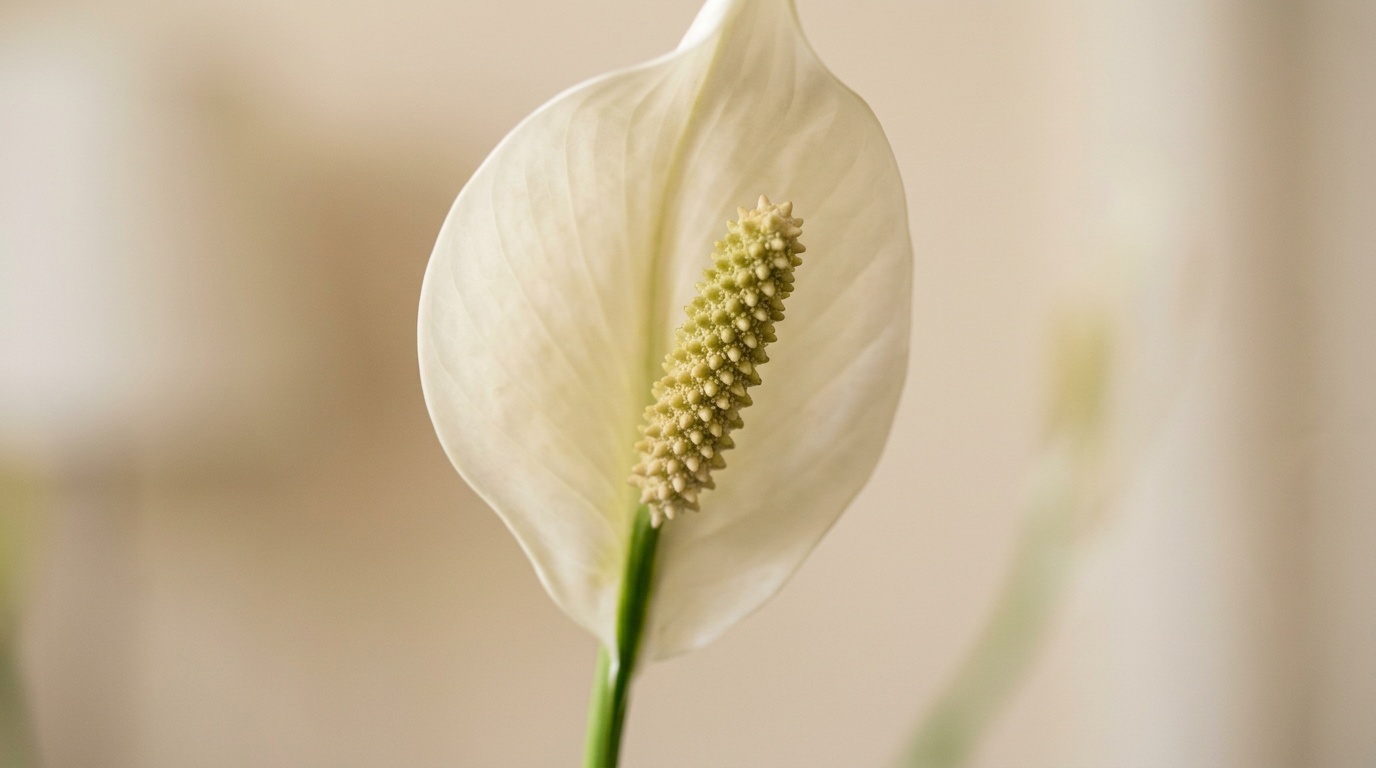
Many aroids — the family that includes peace lilies, monsteras, philodendrons, anthuriums, and some much wilder species — produce flowers on a structure called an inflorescence. That’s the spadix (the spike in the middle) surrounded by the spathe (the leaf-like hood or bract around it). The tiny actual flowers are clustered along that spadix.
In some aroids, that spadix heats up. That’s thermogenesis — the plant actively generates heat through a metabolic process, burning carbohydrates somewhat like how our muscles generate heat during exercise. We’re not talking a small amount, either. Some species can raise the temperature of their spadix 15 to 35 degrees Celsius above the surrounding air temperature. That’s a meaningful, measurable heat event.
What that heat does is volatilize odor compounds. The plant produces chemicals — things like oligosulfides, amines, indole, and other compounds — that at room temperature might not project very far. But heat them up, and suddenly they’re releasing into the air effectively, projecting the scent across a wider area.
The smell is designed to mimic rotting animal matter, dung, or fermenting organic material. And for certain pollinators — carrion flies, dung beetles, some species of small beetles — those smells are irresistible. They signal food. They signal a place to lay eggs. The fly follows the smell, crawls around the inflorescence looking for what attracted it, picks up pollen, gets confused and moves on, and potentially carries that pollen to another plant.
The plant gets pollination done without producing nectar or offering any actual reward. It’s a complete con, and it works.
Which Aroids Actually Do This?
The range is wide, from plants you’ll never keep indoors to ones sitting on your windowsill right now.
Amorphophallus titanum — the corpse flower. This is the dramatic end of the spectrum. It can take a decade to bloom, the inflorescence can reach ten feet tall, and the smell has been described as a combination of rotting flesh, sweaty socks, and Limburger cheese. The thermogenesis is significant and well-documented. You’re not keeping this one in a studio apartment.
Amorphophallus konjac. The konjac plant that gets made into konjac noodles. More manageable in size, and yes, when it flowers, it produces a notable carrion smell. People do grow this one as a houseplant or in gardens in temperate zones.
Dracunculus vulgaris — dragon arum. A Mediterranean plant with a dramatic dark-purple spathe and a spadix that smells, during its flowering window, like something has definitely died nearby. The smell is strongest in the morning and fades by afternoon. It’s actually quite a striking plant to grow if you have outdoor space and can handle the occasional alarming odor event.
Arum species. Various Arum plants — lords-and-ladies, Italian arum, and others — produce milder but similar smells. These are more widely naturalized, and some people grow them in shade gardens without realizing the flowers have a distinct odor.
Peace lily (Spathiphyllum). This one surprises people. Peace lily flowers don’t smell like carrion — not even close. But some people notice a faint musty, slightly unpleasant smell when the spathe opens, and it can be puzzling. It’s a much attenuated version of the same general strategy: producing scent compounds through the inflorescence to attract small insects. It’s mild enough that many people don’t notice it at all, and some peace lily cultivars seem scentless. If you’re getting a sulfurous or rotten-egg smell from your peace lily, though, check the soil — that’s more likely a root issue than the flower.
How Long Does the Smell Last?
This is the good news. The thermogenesis and odor production in most aroids is a short window — often 12 to 48 hours at peak, sometimes just one intense morning or evening. The plant isn’t going to smell bad indefinitely. It’s running a brief, targeted campaign to attract the right insects, and then it’s done.
If you have something like a Dracunculus vulgaris outdoors, you can usually just give it some space for that window and it passes. For indoor plants like Amorphophallus konjac — yes, people do bloom these inside, intentionally or accidentally — you might want to move it to a garage or a well-ventilated space during the bloom. The smell is genuinely strong.
Peace lilies, again, are not usually a problem. Most people never notice anything.
Before You Panic: A Quick Checklist
If your aroid smells and you’re not sure what’s happening, here’s how to think through it:
- Is it currently flowering or producing a spathe? If yes, give it 24–48 hours and see if the smell fades. That’s your most likely answer.
- Is the smell coming from the soil? Sour or rotten smells from the potting mix often mean overwatering and root rot, which is a separate problem from inflorescence odor. Check the roots.
- Is the smell constant, or did it just start? Bloom-related smells tend to appear suddenly and fade. Rot-related smells build gradually and don’t stop.
- What kind of aroid is it? A peace lily producing a faint musty smell during bloom is normal. A monstera producing a strong carrion smell is not typical — monsteras do flower, but the inflorescence isn’t known for dramatic odor production.
A Note on Aroids That Behave Unexpectedly
Aroids in general are full of surprises. The same family that gives you the nearly-odorless elegance of an anthurium gives you the corpse flower. The same growth pattern that makes a pothos trail quietly down a shelf drives a Monstera deliciosa to climb toward the canopy and develop fenestrated leaves the size of a serving platter — something I wrote about more in Why the Same Plant Grows Leaves of Completely Different Sizes. And the climbing behavior that sends a philodendron up a moss pole toward your ceiling is part of the same broader plant intelligence discussed in Why Plants Climb (And What They’re Actually Doing When They Find a Support).
The point is that aroids do things for reasons, even when those reasons aren’t immediately obvious to us. Smelling bad when they flower is one of the more dramatic examples, but it fits the pattern: these are plants that have evolved specific, effective strategies for getting what they need. Understanding what they’re actually doing makes them a lot more interesting to grow.
Does Any of This Change How You Care for Them?
Not really, and that’s kind of the nice part. The thermogenesis and odor production is something the plant manages entirely on its own — you don’t need to do anything to trigger it or support it. It happens when the plant is ready, runs its brief course, and stops.
What it does change is how you respond when it happens. Instead of pulling the plant apart looking for a problem, you can recognize the sign — inflorescence, brief smell, probably flies showing up near your window for a couple days — and just let it do its thing.
If you’re growing something like Amorphophallus konjac and you’re hoping for a bloom, keep in mind that these plants generally need a dormant period and a large enough corm (the underground storage structure) to have the energy to flower. Good soil with solid drainage and some organic matter helps. I’m a big fan of mixing in Halatool Natural Sphagnum Moss for moisture retention without waterlogging — that balance matters a lot for aroids that go through dormancy.
For peace lilies and most common indoor aroids, just keep doing what you’re doing. A healthy, well-lit plant in decent soil is going to bloom on its own timeline, and if it produces a faint smell when it does, now you know why.
What Plant Smells Like Rotting Meat? (And Other Things People Ask)
One question I see a lot is people asking what plant smells like rotting meat after stumbling across the phenomenon without knowing the name for it. The short answer is: usually an Amorphophallus species, a Dracunculus, or an Arum. If you’re trying to identify a plant based on a carrion smell during flowering, those are the main places to look.
Another common one: people who have a peace lily that’s been fine for years suddenly noticing a smell and assuming something’s wrong. Nine times out of ten, the plant just decided to flower. If the smell is coming from above the soil and there’s a spathe visible, that’s your answer.
The more you grow aroids, the more you start to appreciate how much is going on beneath the surface — or in this case, above it. These plants are doing complex, coordinated things when they flower. The smell isn’t a malfunction. It’s the plant working exactly as intended. And honestly, that’s kind of great.
Frequently asked questions
Why does my plant smell bad when it flowers?
If your aroid smells bad only when it's flowering, that's almost certainly intentional. Many aroids produce compounds that mimic rotting meat or dung to attract carrion flies and beetles, which then carry pollen. The smell usually fades within a day or two once the flowering window closes.
Do peace lily flowers smell?
Peace lily flowers can have a faint musty or slightly unpleasant smell, especially when the spathe first opens. It's much milder than something like an Amorphophallus, but it works on the same general principle — attracting small insects for pollination. If the smell is strong or coming from the soil, that's a different issue worth checking out.
What plant smells like rotting meat?
The most famous is Amorphophallus titanum, the corpse flower, but several other aroids do this too — Dracunculus vulgaris (dragon arum), various Arum species, and some Stapelia succulents outside the aroid family. Most produce the smell only for a short window of a day or two during peak flowering.
Is it normal for aroids to smell when flowering?
For many aroids, yes — a smell during flowering is completely normal and actually a sign the plant is doing what it's supposed to do. Before worrying, check whether the plant is currently producing a flower or spathe. If the smell is coming from the soil or the leaves rather than the bloom, that's worth investigating separately.