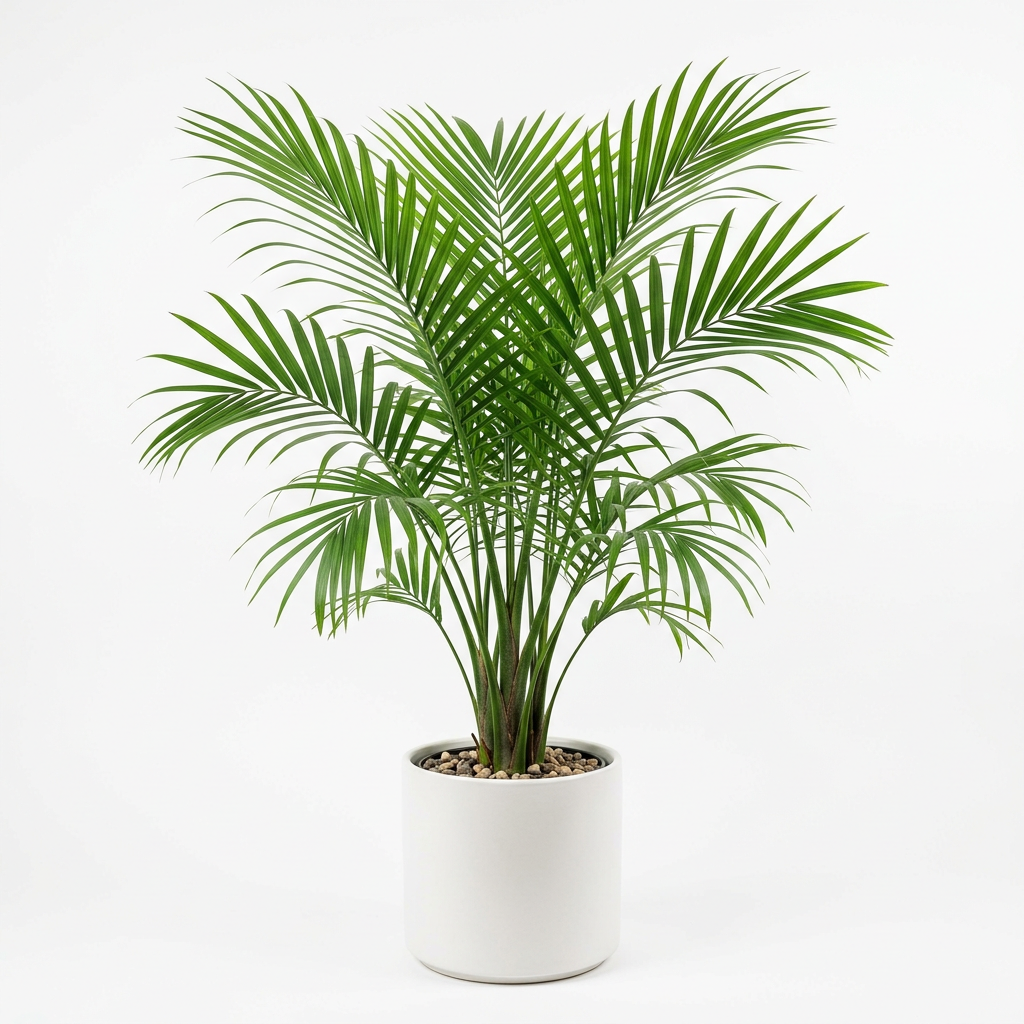
Majesty Palm
ModerateRavenea rivularis
Majesty palms bring resort-style tropical drama to bright, humid indoor spaces, though they need more consistent care than most houseplants to stay lush and green.
Light
Bright indirect to some direct light
Water
Every 1 week
Humidity
Average to high (50–70%)
Temperature
65–80°F (18–27°C)
Toxicity
Non-toxic
Majesty palms bring the lush, resort-style drama of the tropics into your home with their arching, feathery fronds and impressive vertical presence. Native to the riverbanks of Madagascar, Ravenea rivularis is one of the more demanding houseplants you can take on — but when its needs are met, it rewards you with genuinely stunning foliage. Be honest with yourself about your light levels and humidity before bringing one home; this is not a plant that tolerates neglect gracefully.
Quick Care Overview
| Care Factor | Requirement |
|---|---|
| Light | Bright indirect to some direct light |
| Water | Every 1 week |
| Humidity | Average to high (50–70%) |
| Temperature | 65–80°F (18–27°C) |
| Soil | Well-draining palm or sandy mix with peat |
| Fertilizer | Monthly spring through fall with palm fertilizer |
| Toxicity | Non-toxic |
Light Requirements
Majesty palms are not the low-light palm they are sometimes marketed as. In the wild they grow along open riverbanks with substantial sun exposure, and indoors they need the brightest spot you can give them — ideally right in front of a south- or west-facing window where they receive at least a few hours of direct or very bright indirect light each day. Poor light is the single biggest reason majesty palms decline indoors.
- Low light: Fronds gradually yellow and new growth slows dramatically; the plant weakens over time and becomes vulnerable to pests.
- Bright indirect light: The sweet spot for most indoor situations — fronds stay green and growth continues at a steady pace through the growing season.
- Direct sun: A few hours of gentle morning or afternoon direct sun is beneficial and even preferred; harsh midday summer sun through glass can scorch fronds, so some filtering at peak hours is wise.
Watering
Majesty palms prefer consistently moist soil, which sets them apart from most palms that tolerate or even prefer drying out between waterings. Aim to water approximately once a week, checking that the top inch of soil has dried slightly before watering again — but never let the soil dry out fully. At the same time, the roots cannot sit in standing water, so drainage is non-negotiable. Water thoroughly until it flows from the drainage holes, then empty the saucer promptly.
Signs of overwatering: Yellowing fronds across the whole plant, soft or mushy base, soil that stays wet for more than 10 days, root rot with a sour smell.
Signs of underwatering: Brown, crispy leaf tips (extremely common and often the first sign), fronds that droop or look dull, dry soil that pulls away from the pot edges.
Humidity and Temperature
As a tropical plant from a riverbank environment, majesty palm genuinely craves humidity. It performs best at 50–70% relative humidity — levels that are higher than most homes naturally maintain, especially in winter when heating systems dry out indoor air. Running a humidifier nearby, grouping it with other tropical plants, or placing it on a pebble tray with water are all practical ways to boost moisture in the air around it. Misting provides only temporary relief and can promote fungal issues if fronds stay wet.
Temperature-wise, keep your majesty palm in the 65–80°F (18–27°C) range year-round. It dislikes cold drafts, air conditioning vents blowing directly on it, and temperatures below 50°F (10°C). Never place it near heating vents either — the hot, dry air damages fronds and tanks humidity locally around the plant.
Soil and Potting
Use a well-draining mix formulated for palms, or blend your own with a base of quality potting soil, coarse sand or perlite, and a small amount of peat to retain modest moisture. The goal is a mix that stays evenly moist without becoming waterlogged. Good drainage holes are essential — majesty palms are susceptible to root rot, and a pot without drainage is asking for trouble.
Repot every 2–3 years or when roots begin circling the bottom or emerging from drainage holes. Choose a pot only 2 inches larger in diameter than the current one; oversized pots hold excess moisture and increase rot risk. Terracotta pots help wick away excess moisture, which can be an advantage if you tend to overwater.
Propagation
- Majesty palms are grown commercially from seed and do not produce offshoots, suckers, or pups like some other palms — meaning division is not an option.
- If you want to try growing from seed, obtain fresh Ravenea rivularis seeds and soak them in warm water for 24 hours before planting in a moist, sandy seed-starting mix.
- Place the container in a warm location (around 80°F / 27°C) and keep the medium consistently moist. Germination can take several weeks to a few months with no guarantee of success.
- For most home growers, buying a new plant from a nursery is far more practical than attempting seed propagation.
Fertilizing
Majesty palms are hungry plants and benefit from regular feeding during the growing season. Apply a palm-specific granular or liquid fertilizer — one that includes magnesium, iron, and manganese micronutrients — once a month from spring through early fall. These micronutrients prevent common deficiency symptoms like yellowing fronds and frizzle top. Dilute liquid fertilizers to half-strength to avoid fertilizer burn, and always apply to moist (not dry) soil. Stop fertilizing in late fall and winter when growth naturally slows.
Common Problems
Brown leaf tips: The most common complaint with majesty palms. Caused by low humidity, underwatering, fluoride or salt buildup in soil, or drafts. Trim brown tips with clean scissors at an angle, then address the underlying cause — usually humidity.
Yellow fronds: Can indicate overwatering, underwatering, insufficient light, or nutrient deficiency. Check soil moisture and drainage first, then assess light levels. If both seem fine, a palm fertilizer application may resolve a nutrient issue.
Spider mites: These are the majesty palm’s most persistent pest problem. Low humidity creates ideal conditions for them. Look for fine webbing on fronds and tiny moving specks on the undersides of leaves. Treat with neem oil or insecticidal soap and boost humidity to prevent reinfestation.
Scale insects: Small brown bumps on fronds and stems. Remove manually with a cotton swab dipped in rubbing alcohol, then treat the entire plant with neem oil.
Frizzle top: New fronds emerge distorted, stunted, and crinkled — a classic sign of manganese deficiency. Apply a palm fertilizer with micronutrients; the condition usually improves within a few months.
Root rot: Caused by overwatering or poor drainage. Symptoms include mushy stems, persistent yellowing, and a foul smell from the soil. Remove the plant from its pot, trim away black or mushy roots, let the remaining roots air-dry briefly, then repot in fresh, well-draining mix.
Is Majesty Palm Toxic?
Majesty palm is non-toxic and completely safe for cats, dogs, and humans. This makes it one of the more pet-friendly choices for large, statement plants, and a good option for households where curious pets or young children share space with your plant collection.
Majesty palms are honestly one of the trickier houseplants to keep looking their best long-term, but with a bright spot, consistent watering, and a little extra humidity, they can be genuinely spectacular. Give yours the conditions it’s asking for, and it will reward you with the kind of lush, tropical presence that makes a room feel like a different world.