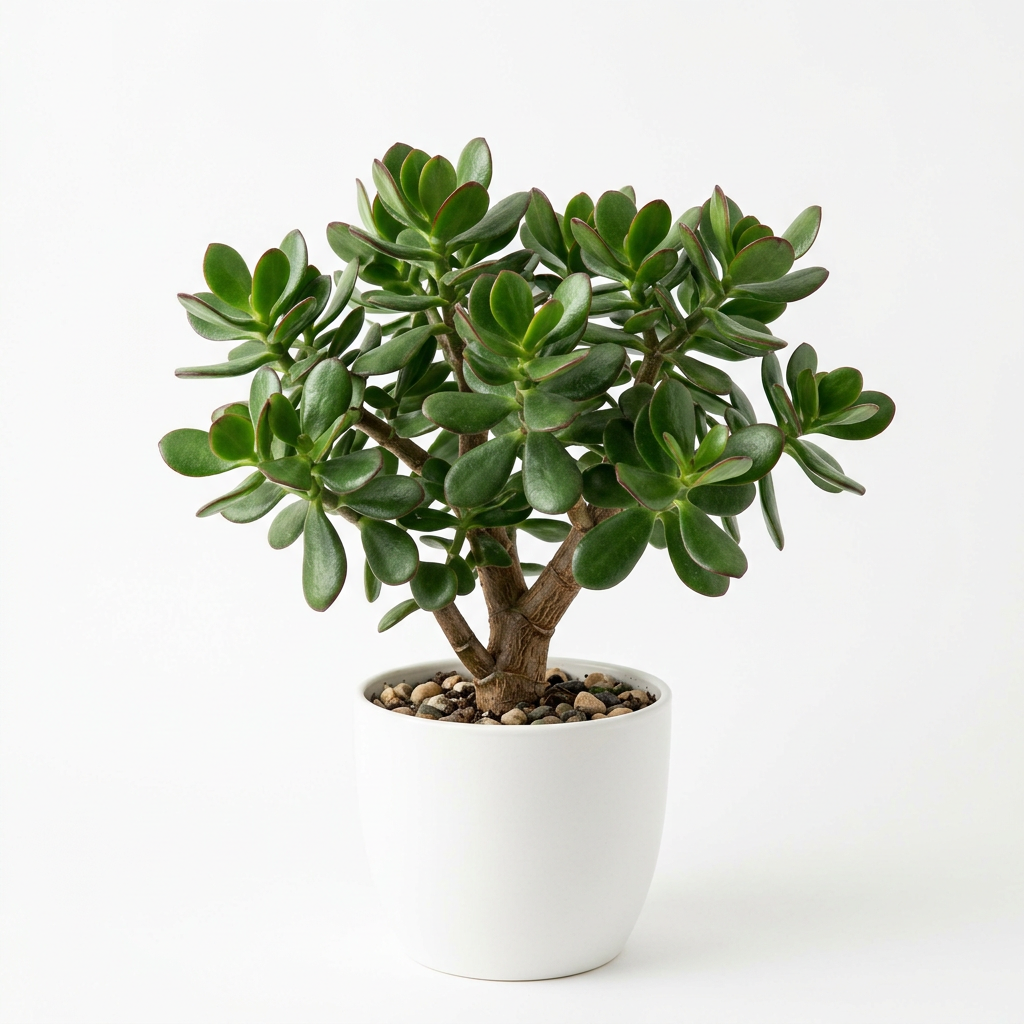
Jade Plant
EasyCrassula ovata
Jade plants are long-lived, tree-form succulents with glossy jewel-like leaves that can be shaped over years into stunning bonsai-style specimens passed down through generations.
Light
Bright direct to indirect light
Water
Every 2–3 weeks
Humidity
Low to average (30–50%)
Temperature
65–75°F (18–24°C)
Toxicity
Toxic to pets
Jade plant (Crassula ovata) is one of the most rewarding succulents you can grow — a slow-growing, tree-form plant with thick, glossy leaves that can live for decades and eventually reach the size of a small shrub. Long celebrated in Feng Shui as a symbol of good luck and prosperity, jade plants are as forgiving as they are beautiful, making them an ideal choice for beginners and a cherished heirloom plant for experienced growers who want to shape them into stunning bonsai-style specimens.
Quick Care Overview
| Care Factor | Requirement |
|---|---|
| Light | Bright direct to indirect light |
| Water | Every 2–3 weeks |
| Humidity | Low to average (30–50%) |
| Temperature | 65–75°F (18–24°C) |
| Soil | Well-draining cactus or succulent mix |
| Fertilizer | Monthly in spring and summer, diluted to half strength |
| Toxicity | Toxic to pets |
Light Requirements
Jade plants are sun-lovers at heart. They thrive in bright light with at least a few hours of direct sun each day — a south- or west-facing windowsill is the sweet spot indoors. That said, they will tolerate indirect bright light, though they’ll grow more slowly and may lose some of their compact, dense structure over time.
- Low light: The plant becomes leggy and stretched (etiolated), with pale leaves and weak, floppy stems that can’t support their own weight. Growth nearly stalls.
- Bright indirect light: Good for long-term health; the plant stays compact and green, though it may not develop the reddish leaf-edge blush that direct sun encourages.
- Direct sun: Ideal — strong, stocky growth with rich green leaves often tipped in red or yellow. If moving a plant outdoors in summer, acclimate it gradually over 1–2 weeks to prevent sunscald on leaves previously grown indoors.
Watering
Jade plants are built for drought. Their thick, fleshy leaves and stems act as water reservoirs, allowing them to go weeks between waterings without complaint. The best approach is the soak-and-dry method: water thoroughly until it drains from the bottom of the pot, then let the soil dry out completely before watering again. In spring and summer (active growing season), this typically means watering every 2–3 weeks. In fall and winter, when the plant slows down, cut back to once a month or even less — the number one killer of jade plants is overwatering during the dormant season.
Always check the soil with your finger or a moisture meter before watering rather than going by a rigid schedule. When in doubt, wait another few days.
Signs of overwatering: Soft, mushy stems; yellow, translucent leaves; leaves dropping without shriveling first; soggy soil that smells earthy or sour. Root rot can set in quickly — if caught early, remove the plant from its pot, trim away rotted roots, let it dry for a day, and repot in fresh dry mix.
Signs of underwatering: Leaves become wrinkled, shriveled, or feel deflated rather than firm and plump. A good thorough watering will usually restore them within 24–48 hours.
Popular Jade Plant Varieties
While the standard Crassula ovata is by far the most common, a few cultivars are worth knowing:
- ‘Hummel’s Sunset’ — Striking gold and red leaf tips, especially vibrant in bright light. One of the most popular ornamental varieties.
- ‘Gollum’ — Tubular, finger-like leaves with red-tipped ends that give it an otherworldly, sculptural look. Also sold as ‘Hobbit’.
- ‘Minima’ — A compact, slower-growing dwarf form ideal for small spaces or bonsai-style growing.
- Tricolor / Variegata — Cream and green variegated leaves with pink edges; slightly more light-sensitive than the standard form.
Humidity and Temperature
Jade plants are unfussy about humidity and are one of the few houseplants that actually prefer the dry air found in most homes — typical indoor humidity of 30–50% suits them perfectly. You don’t need to mist jade plants or use a humidifier; in fact, excess moisture on the leaves can encourage fungal issues.
Temperature-wise, jade plants are comfortable in the same range humans prefer: 65–75°F (18–24°C) during the day. They can tolerate brief dips into the 50s°F (around 10°C) and actually benefit from cooler nights in fall, which can trigger the charming small white or pink star-shaped flowers some mature plants produce. What they cannot tolerate is frost — temperatures below 32°F (0°C) will damage or kill them. Keep them away from cold drafts near windows in winter, and never leave them outside once nighttime temperatures consistently drop below 50°F (10°C).
Soil and Potting
Drainage is everything for jade plants. Use a commercial cactus and succulent potting mix, or improve standard potting soil by mixing in 30–50% perlite or coarse horticultural sand to ensure water moves through quickly and roots never sit in moisture.
Terracotta pots are ideal — their porous walls allow soil to dry more evenly and help prevent the soggy conditions jade plants hate. Whatever pot you choose, make sure it has at least one drainage hole; jade plants in pots without drainage are prone to root rot no matter how carefully you water.
Repot every 2–3 years, or when roots start creeping out of the drainage holes. Jade plants don’t mind being slightly root-bound and will actually stay more compact when a little snug. When repotting, move up only one pot size, and hold off watering for about a week after repotting to let any damaged roots heal.
Propagation
Jade plants are among the easiest succulents to propagate — a single healthy stem or leaf can become a new plant in just a few weeks.
- Choose your cutting. For stem cuttings, select a healthy stem 3–5 inches long with several pairs of leaves. For leaf propagation, gently twist a plump, healthy leaf straight off the stem — you want the base intact.
- Let it callous. Place the cutting or leaf on a dry surface out of direct sun for 1–3 days. This lets the cut end form a callous, which prevents rot when it contacts soil.
- Plant in dry mix. Set stem cuttings upright in slightly moist cactus mix, burying 1–2 inches of bare stem. Lay leaves flat on top of the mix or prop them at a slight angle — don’t bury them.
- Hold off on watering. Wait 5–7 days before watering lightly. The stress encourages the cutting to push out roots in search of moisture.
- Wait and watch. Roots typically form in 2–4 weeks. You’ll know rooting is underway when you feel gentle resistance if you tug lightly on the cutting, or when you spot tiny pink or white roots at the base. Leaves will begin sprouting small rosettes at the base over several weeks to months.
- Transition to normal care. Once rooted and showing new growth, treat the new plant like a mature jade — bright light and infrequent watering.
Fertilizing
Jade plants are light feeders — they don’t need much and can be harmed by excess fertilizer, which causes salt buildup in the soil and can burn roots. Feed once a month during spring and summer with a balanced liquid fertilizer (such as 10-10-10 or a dedicated succulent formula) diluted to half the recommended strength. Stop fertilizing in fall and do not feed at all during winter when the plant is resting. Flush the soil with plain water every few months to prevent mineral buildup.
Common Problems
Yellow, mushy leaves: Almost always overwatering or poor drainage. Allow the soil to dry fully, check for root rot, and adjust your watering frequency. Switch to a well-draining mix if needed.
Leggy, stretched growth: Insufficient light. The plant is reaching toward whatever light source it can find. Move it to a brighter spot — ideally with some direct sun — and the new growth will be more compact. You can prune leggy stems back to encourage bushier growth.
Wrinkled or shriveled leaves: Underwatering. Water thoroughly and leaves should firm back up within a day or two. This is much easier to fix than overwatering.
White crusty deposits on soil or pot: Mineral buildup from tap water or fertilizer salts. Flush the pot thoroughly with water a few times, or repot into fresh mix. Switching to filtered or rainwater can help prevent this.
Brown, corky patches on stems: Usually a minor cosmetic issue caused by age, old damage, or minor sunburn — especially common at the base of mature stems. As long as the plant is growing normally, this is not a cause for concern.
Sudden leaf drop: Typically caused by cold drafts, a sudden temperature change, or being moved from one light environment to another. Stabilize conditions and the plant will usually recover.
Mealybugs: The most common pest on jade plants — look for white cottony masses in leaf joints. Remove with a cotton swab dipped in rubbing alcohol, and follow up with neem oil or insecticidal soap spray. Inspect regularly, as mealybugs spread to nearby plants.
Is Jade Plant Toxic?
Yes — jade plants are toxic to cats and dogs. Ingestion can cause vomiting, lethargy, and incoordination in pets, though the exact toxic compound has not been fully identified. Symptoms are typically not life-threatening but can be distressing, and a veterinary call is always a good idea if you suspect your pet has chewed on a jade plant. Keep jade plants on high shelves or in rooms that pets cannot access.
With their sculptural good looks, remarkable longevity, and easygoing nature, jade plants reward patience like few other houseplants — given a bright windowsill and a light hand with the watering can, yours might well outlast you.