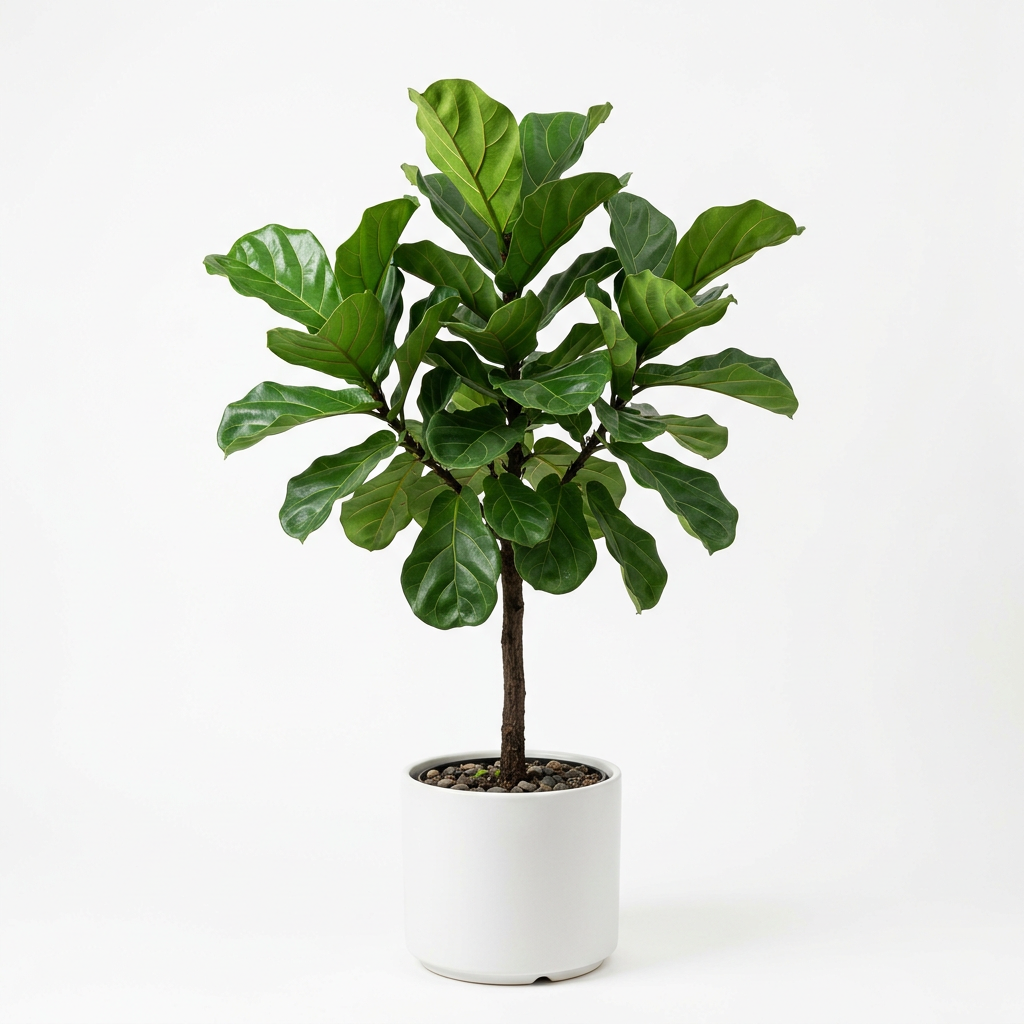
Fiddle Leaf Fig
ChallengingFicus lyrata
The fiddle leaf fig is the showstopper of the houseplant world — large, architectural leaves on a tall trunk that demands consistent care but rewards it with stunning results.
Light
Bright indirect light
Water
Every 1–2 weeks
Humidity
Moderate (30–65%)
Temperature
60–75°F (15–24°C)
Toxicity
Toxic to pets
The fiddle leaf fig has earned its reputation as the houseplant world’s most dramatic diva — and its most coveted trophy. With enormous, violin-shaped leaves that can stretch over a foot long and a tall, sculptural silhouette, Ficus lyrata makes a statement few other indoor plants can match. It is genuinely challenging to keep happy, but understanding what it needs (and what it hates) makes all the difference between a thriving specimen and a slow-motion leaf-drop disaster.
Quick Care Overview
| Care Factor | Requirement |
|---|---|
| Light | Bright indirect light |
| Water | Every 1–2 weeks |
| Humidity | Moderate (30–65%) |
| Temperature | 60–75°F (15–24°C) |
| Soil | Well-draining potting mix with perlite |
| Fertilizer | Monthly during spring and summer |
| Toxicity | Toxic to pets |
Light Requirements
Fiddle leaf figs are light-hungry plants that thrive in a bright, consistent spot. A south- or east-facing window is ideal — you want strong, steady light without harsh afternoon sun beating directly on the leaves. What matters almost as much as intensity is consistency: moving this plant around is one of the fastest ways to trigger leaf drop.
- Low light: Growth slows dramatically, lower leaves yellow and drop, and the plant becomes increasingly vulnerable to root rot from soil that stays wet too long.
- Bright indirect light: The sweet spot — leaves stay large, glossy, and deeply green, and the plant produces new growth steadily through the growing season.
- Direct sun: Harsh afternoon sun scorches the leaves, leaving pale or brown bleached patches that won’t recover. A sheer curtain can tame an otherwise-too-intense window.
Watering
Water your fiddle leaf fig every 1–2 weeks, allowing the top 1–2 inches of soil to dry out between sessions. Consistency is the single most important watering rule — erratic cycles of drought and soaking are a leading cause of the brown spots this plant is infamous for. Always check the soil with your finger before watering rather than following a rigid calendar, since seasonal light changes affect how fast the pot dries out.
Signs of overwatering: Brown spots with a yellow halo, typically starting in the center of the leaf or along the edges of lower leaves. Soil that stays soggy for days, and a musty smell from the pot, point to root rot.
Signs of underwatering: Crispy, dry brown edges that creep inward, leaves that feel slightly limp, and sudden leaf drop — especially of otherwise-healthy-looking leaves — when the plant finally hits a stress threshold.
Popular Varieties
- ‘Bambino’ — A compact, slow-growing dwarf form with smaller leaves, better suited to apartments and smaller spaces than the standard species.
- ‘Suncoast’ — A cultivar selected for sturdier, more upright growth and slightly better tolerance of indoor conditions.
- ‘Compacta’ — Denser branching and smaller leaf size than the standard species, popular for those who want the look in a more manageable package.
Humidity and Temperature
Fiddle leaf figs prefer temperatures between 60–75°F (15–24°C) and are highly sensitive to cold snaps and sudden temperature swings. Keep the plant away from air conditioning vents, drafty windows, and exterior doors — a cold draft of even a few degrees below its comfort zone can trigger a wave of leaf drop that feels completely out of proportion to the temperature change.
Humidity in the moderate range of 30–65% is sufficient for most homes, though the higher end of that range produces lusher growth. Avoid placing the plant near heating vents, which blast dry air directly onto the foliage. A pebble tray with water or a nearby humidifier can help in particularly dry climates or during winter months when indoor heating drops humidity sharply.
Soil and Potting
Use a well-draining potting mix amended with perlite — roughly two parts quality indoor potting soil to one part perlite works well. The goal is a mix that holds enough moisture to hydrate the roots but drains fast enough that the soil never becomes waterlogged. Fiddle leaf figs are susceptible to root rot, and dense, compacted soil that holds excess moisture is a primary cause.
Repot every 1–2 years in spring, moving up only one pot size at a time. A pot that is too large holds excess soil that stays wet long after the roots have drunk their fill — a classic root rot setup. Ensure any pot has drainage holes, and always empty the saucer after watering.
Propagation
- Select a healthy stem with at least one large leaf and a visible node (the bump where the leaf meets the stem).
- Cut just below the node using clean, sharp scissors or pruning shears.
- Allow the cut end to sit exposed for 20–30 minutes so the milky latex sap can dry and seal — this reduces the chance of rot.
- Place the cutting in a jar of room-temperature water, with the node submerged and the leaf above the waterline.
- Set the jar in a warm, bright spot out of direct sun, and change the water every few days to keep it fresh.
- Expect roots to appear in 4–8 weeks. Once roots are 1–2 inches long, pot the cutting into moist soil.
- Alternatively, root directly in a small pot of moist perlite or a 50/50 perlite-potting mix, covering loosely with a plastic bag to maintain humidity.
Fertilizing
Feed your fiddle leaf fig once a month during the active growing season — spring through summer. Use a balanced liquid fertilizer (10-10-10 or similar) diluted to half the recommended strength. Do not fertilize in fall or winter, when growth slows and the plant cannot use the nutrients effectively. Over-fertilizing, especially with a nitrogen-heavy formula, can cause salt buildup in the soil and leaf burn along the edges.
Common Problems
Brown spots with yellow halos: Almost always a sign of overwatering or root rot. Let the soil dry out more completely between waterings, check that drainage is adequate, and inspect the roots if the problem persists — healthy roots are white or tan, while rotten roots are dark brown and mushy.
Crispy brown leaf edges: Typically caused by underwatering, low humidity, or hot dry air from a heating vent. Increase watering frequency slightly and move the plant away from direct air sources.
Sudden leaf drop: The fiddle leaf fig’s most dramatic protest, usually triggered by being moved to a new location, a cold draft, or a significant change in light. Find a stable, bright spot and commit to it — the plant calms down once it adjusts.
Yellow leaves: Yellowing lower leaves can indicate overwatering, poor drainage, or natural aging of older leaves. Widespread yellowing across the plant suggests a more systemic watering or root issue.
Pale or bleached leaf patches: Sun scorch from direct afternoon light. Move the plant back from the window or filter the light with a sheer curtain.
No new growth: Common in winter or in low-light conditions. Ensure the plant is receiving adequate bright indirect light and resume fertilizing in spring. New growth should appear as conditions improve.
Is Fiddle Leaf Fig Toxic?
Yes — fiddle leaf fig is toxic to pets. Ficus lyrata produces a milky latex sap throughout its stems and leaves that is toxic to cats and dogs if ingested, causing symptoms including mouth irritation, drooling, vomiting, and gastrointestinal upset. The sap can also irritate human skin on contact, so it is a good idea to wear gloves when pruning or propagating and to wash your hands thoroughly afterward. Keep this plant out of reach of curious pets and children.
The fiddle leaf fig rewards patience and consistency more than any other houseplant care habit — find it a bright, stable spot, water it on a reliable schedule, and resist the urge to move it around, and you will find it far less temperamental than its reputation suggests.