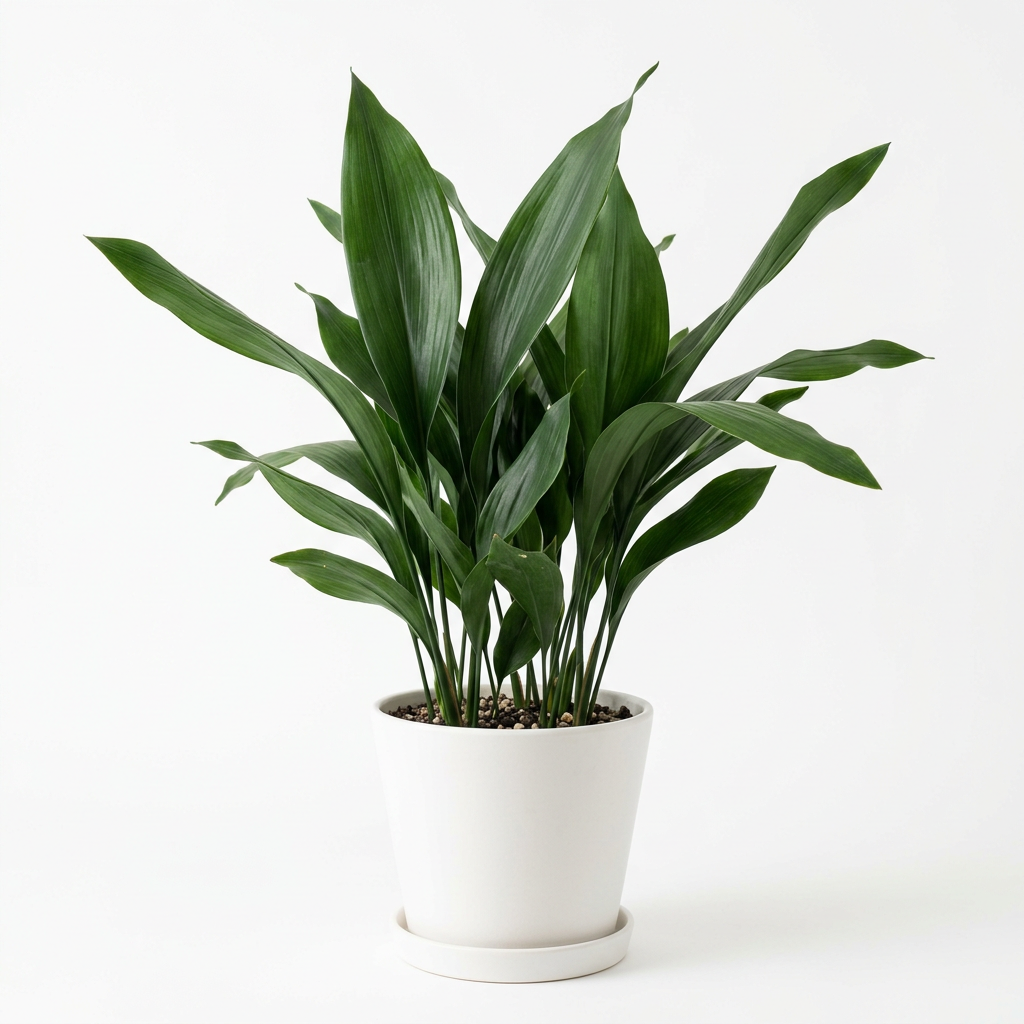
Cast Iron Plant
Very EasyAspidistra elatior
Cast iron plants live up to their name — virtually indestructible survivors that tolerate deep shade, drought, and temperature extremes that would finish off most other houseplants.
Light
Low light
Water
Every 2–3 weeks
Humidity
Average (40–60%)
Temperature
45–85°F (7–29°C)
Toxicity
Non-toxic
The cast iron plant earns its name honestly — this is a houseplant that simply refuses to give up. Native to the forest floors of Japan and China, Aspidistra elatior thrives in the deep shade and irregular care that would send most plants to an early grave. If you want bold, glossy, architectural foliage with almost zero drama attached, the cast iron plant is your plant.
Quick Care Overview
| Care Factor | Requirement |
|---|---|
| Light | Low light |
| Water | Every 2–3 weeks |
| Humidity | Average (40–60%) |
| Temperature | 45–85°F (7–29°C) |
| Soil | Well-draining potting mix |
| Fertilizer | Monthly in spring and summer, diluted to half strength |
| Toxicity | Non-toxic |
Light Requirements
Cast iron plants are the undisputed champions of low-light houseplants. They evolved under the dense canopy of temperate forests, so they’re perfectly adapted to the dim corners and north-facing rooms that stump most other plant parents. They’ll grow happily in spots that receive only ambient or fluorescent light — that hallway, the dim bathroom, the office cubicle — without complaint.
- Low light: Where this plant truly belongs. It grows slowly but steadily and keeps its deep, glossy color with very little natural light.
- Bright indirect light: Perfectly acceptable and may encourage slightly faster growth, but offer no real advantage over low light.
- Direct sun: Avoid entirely. Direct sun bleaches and scorches the dark leaves, leaving pale, washed-out patches that won’t recover.
Watering
Cast iron plants want to be watered infrequently and allowed to dry out between sessions. In spring and summer, watering every 2–3 weeks is typically right; in autumn and winter, you can stretch that to once a month or even longer. The key rule: when in doubt, wait. These plants store moisture in their thick rhizomes and are far more likely to suffer from overwatering than from drought.
When you do water, water thoroughly — drench the soil until water runs from the drainage holes, then let it drain completely before returning the pot to its saucer. Never let the plant sit in standing water.
Signs of overwatering: Yellowing leaves starting at the lower stems, soft or mushy spots at the base, and a sour smell from the soil pointing to root rot.
Signs of underwatering: Leaves that look dull, slightly wrinkled, or develop dry brown tips — though this takes quite a while to appear, as the plant has significant drought reserves.
Popular Varieties
Cast iron plants have a handful of named cultivars worth seeking out if you want something beyond the classic all-green species:
- ‘Variegata’ — the most widely available cultivar, featuring white or cream stripes running lengthwise along the dark green leaves. Note that variegated forms revert to green in low light, so they need a bit more brightness to hold their pattern.
- ‘Milky Way’ — speckled with irregular cream or yellow-white dots that resemble a starfield, giving it a striking, almost whimsical look.
- ‘Asahi’ — leaves that emerge green but develop creamy-white tips as they mature, creating a two-toned effect.
- ‘Okame’ — a compact form with narrower leaves than the species, well suited to smaller spaces.
Humidity and Temperature
Cast iron plants are genuinely easygoing about humidity. Average household humidity of 40–60% suits them perfectly, and they’ll tolerate drier air without much fuss — no misting, pebble trays, or humidifiers required. They do appreciate good air circulation, so avoid cramming them into a tight, stuffy corner.
Temperature-wise, these plants handle a remarkably wide range of 45–85°F (7–29°C), making them one of the more cold-tolerant tropical houseplants available. They can even survive brief dips below 45°F (7°C) if they’re healthy and well-established, though sustained cold and frost will damage them. Keep them away from heating vents and cold drafts — it’s rapid temperature swings, not a cool room, that cause problems.
Soil and Potting
A standard well-draining potting mix works well for cast iron plants. Adding perlite at a ratio of about 20–30% improves drainage and reduces the risk of soggy soil, which is their main weakness. Good drainage is non-negotiable — this plant will tolerate many hardships, but consistently wet roots will eventually cause root rot.
Cast iron plants are slow growers and genuinely prefer being slightly root-bound, so resist the urge to repot frequently. Repot every 3–5 years, or when roots are visibly emerging from the drainage holes, moving up only one pot size at a time. Spring is the best time to repot. Choose a pot with at least one drainage hole — no exceptions.
Propagation
Cast iron plants are propagated by division of their underground rhizomes. It’s slow and simple — there’s no other practical method for home growers.
- Remove the plant from its pot in spring, when growth is beginning.
- Gently brush away soil from the root mass to expose the rhizomes.
- Use a clean, sharp knife or pruning shears to separate the rhizomes into sections, ensuring each division has at least two or three healthy leaves and a good set of roots attached.
- Dust the cut surfaces with powdered sulfur or activated charcoal to reduce the risk of infection, and allow cuts to air-dry for an hour.
- Pot each division into fresh, well-draining potting mix in an appropriately sized pot.
- Water lightly and place in a warm, low-light spot. Keep the soil just barely moist while the divisions establish.
- Expect slow progress — new growth may not appear for several months, which is completely normal.
Fertilizing
Cast iron plants are light feeders and don’t need much encouragement. Fertilize once a month during spring and summer using a balanced liquid fertilizer (such as 10-10-10) diluted to half the recommended strength. Do not fertilize in autumn and winter, when the plant’s growth naturally slows. Over-fertilizing can cause salt buildup in the soil, leading to brown leaf tips — less is genuinely more with this plant.
Common Problems
Yellow leaves: The most common issue, almost always caused by overwatering or root rot. Check that the soil has dried out before watering again, and inspect the roots. Some lower-leaf yellowing as older leaves age naturally is normal.
Brown leaf tips: Usually a sign of fluoride sensitivity, overfertilizing, or very low humidity. Switch to filtered or distilled water if using tap water heavily treated with fluoride, ease up on fertilizer, and ensure the pot has good drainage.
Pale, bleached patches: Direct sun is the culprit. Move the plant to a shadier location — the affected areas won’t recover, but new growth will emerge healthy.
No new growth: Cast iron plants are genuinely slow growers, and this is usually just normal behavior rather than a problem. If growth has completely stalled for more than a year, check that the plant isn’t severely root-bound, isn’t receiving zero light, or hasn’t been starved of nutrients.
Root rot: Caused by consistently wet soil. Remove the plant, trim any black or mushy roots with sterile scissors, let the roots air-dry briefly, treat with a diluted hydrogen peroxide solution, and repot into fresh, dry soil. Improve your watering habits going forward.
Scale or mealybugs: Occasional pests that shelter in the leaf axils or along the undersides of leaves. Wipe affected areas with a cotton swab dipped in rubbing alcohol, and treat with neem oil or insecticidal soap spray. The thick, smooth leaves make these pests relatively easy to spot and treat.
Is Cast Iron Plant Toxic?
Cast iron plants are non-toxic and completely safe for cats, dogs, and humans. There’s no need to keep them out of reach of curious pets or young children — which makes them an excellent choice for busy, pet-filled households that still want beautiful, low-maintenance greenery.
The cast iron plant rewards neglect with quiet, steadfast grace. Give it a dim corner, water it occasionally, and it will outlast every trend, every roommate, and quite possibly every other plant in your collection.