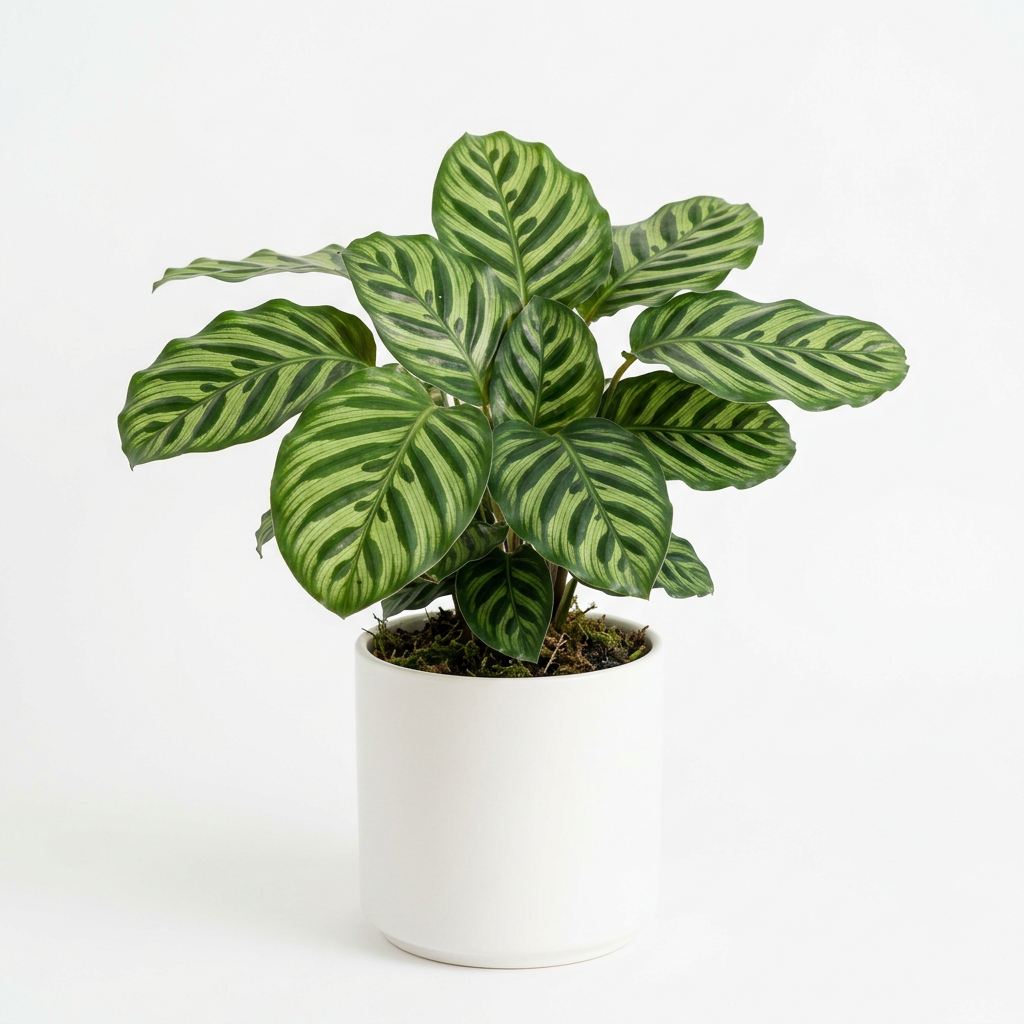
Calathea
ChallengingCalathea orbifolia
Calatheas are living works of art with intricately patterned leaves that fold upward at night — beautiful but demanding about humidity, water quality, and light.
Light
Low to medium indirect light
Water
Every 1 week
Humidity
High (60–80%)
Temperature
65–80°F (18–27°C)
Toxicity
Non-toxic
Calatheas are the drama queens of the houseplant world — and honestly, they’ve earned it. With leaves that look hand-painted and the enchanting habit of folding upward each evening like hands in prayer, Calathea orbifolia is one of the most visually striking plants you can grow indoors. They do ask a bit more of you than a pothos, but once you understand what they need, they reward you with foliage that genuinely stops people in their tracks.
Quick Care Overview
| Care Factor | Requirement |
|---|---|
| Light | Low to medium indirect light |
| Water | Every 1 week |
| Humidity | High (60–80%) |
| Temperature | 65–80°F (18–27°C) |
| Soil | Well-draining, peat-free mix with perlite |
| Fertilizer | Monthly during spring and summer, diluted to half strength |
| Toxicity | Non-toxic |
Light Requirements
Calathea orbifolia evolved on the shaded forest floor of South America, which tells you everything about its light preferences. It wants bright enough to show off its patterns, but never harsh enough to bleach or burn them. A spot a few feet back from an east- or north-facing window is often ideal — somewhere with gentle, consistent indirect light throughout the day.
- Low light: Growth slows noticeably and the silvery-green patterning may fade and dull. The plant will survive, but it won’t thrive.
- Bright indirect light: The sweet spot. Leaves stay vibrant and patterned, growth is steady, and the plant maintains good form.
- Direct sun: Even a few hours of direct sun will bleach the distinctive markings, scorch leaf edges, and cause curling. Keep calathea well away from south- and west-facing windows without a sheer curtain.
Watering
Calatheas like to stay consistently moist — not soggy, not bone dry. Aim to water approximately once a week, checking that the top inch of soil has dried out before you water again. Reduce frequency slightly in winter when growth slows and light is lower. The plant is far more tolerant of slight underwatering than overwatering, which quickly causes root rot.
Here’s the critical detail most guides skip: calatheas are extremely sensitive to fluoride and chlorine in tap water. These compounds accumulate in the leaves and cause brown, crispy leaf tips and edges even when humidity and watering frequency are perfect. Use filtered water, distilled water, or collect rainwater. If you must use tap water, let it sit uncovered overnight to allow chlorine to off-gas — though this won’t remove fluoride.
Water slowly at the base of the plant, keeping water off the leaves, and ensure the pot drains fully so roots never sit in standing water.
Signs of overwatering: Yellowing lower leaves, mushy stems near the base, soil that stays wet for more than 10 days, and a musty smell from the pot. Signs of underwatering: Leaves curling inward lengthwise, dry and papery leaf edges, and soil pulling away from the pot edges.
Popular Calathea Varieties
The Calathea genus (and its close relatives now reclassified as Goeppertia) contains dozens of stunning cultivars, each with distinct patterning. Here are some of the most sought-after:
| Variety | Distinctive Markings |
|---|---|
| Calathea orbifolia | Large, round leaves with broad silvery-green stripes on a mid-green background |
| Calathea ornata | Deep green leaves with fine pink or white pinstripes, purple undersides |
| Calathea medallion | Feathered pale green markings on dark green above, deep burgundy-purple below |
| Calathea lancifolia (Rattlesnake Plant) | Long, narrow leaves with dark oval spots and wavy edges, purple undersides |
| Calathea makoyana (Peacock Plant) | Pale green with dark oval brushstrokes, intricate mosaic pattern on undersides |
| Calathea zebrina (Zebra Plant) | Bold dark green zebra stripes on a bright lime-green background |
| Calathea roseopicta ‘Dottie’ | Near-black leaves with a vivid hot-pink ring and midrib, purple undersides |
Humidity and Temperature
High humidity is non-negotiable for calatheas. They need 60–80% relative humidity to look their best — anything consistently below 50% will result in brown leaf edges regardless of how perfect everything else is. Most homes run at 30–50% humidity, which means you’ll need to actively increase it.
A room humidifier running nearby is the most effective solution. Grouping plants together helps modestly. Misting is largely ineffective and can encourage fungal issues — skip it and invest in a small humidifier instead. A pebble tray with water placed beneath the pot adds a little humidity directly around the plant.
Calatheas are comfortable in temperatures between 65–80°F (18–27°C). They’re sensitive to cold drafts, air conditioning vents, and heating vents — all of which cause rapid moisture loss from the leaves. Keep your calathea away from exterior doors, windows that leak cold air in winter, and any forced-air vents. Never let temperatures drop below 60°F (15°C).
Soil and Potting
Calatheas need a mix that holds some moisture but drains well enough to prevent waterlogging. A good formula is two parts quality peat-free potting mix to one part perlite, with a small addition of orchid bark for aeration. Avoid dense, compacting soils — they suffocate roots and stay too wet.
Use a pot with generous drainage holes. Terracotta pots can help if you tend to overwater, as they wick away excess moisture. Plastic or glazed ceramic pots retain more moisture, which suits calatheas in drier environments.
Repot every one to two years in spring, moving up just one pot size at a time. Calatheas are somewhat root-bound tolerant and don’t need a lot of extra space — oversized pots hold excess moisture and increase root rot risk.
Propagation
Calatheas cannot be propagated from stem cuttings or leaf cuttings — the only reliable method is division at repotting time.
- Remove the plant from its pot and gently shake away loose soil from the root ball.
- Identify natural separation points — clusters of stems with their own root systems attached.
- Use clean hands or a sterile knife to carefully separate the root ball into two or more clumps, each with at least two to three stems and a healthy portion of roots.
- Pot each division into fresh, well-draining mix in an appropriately sized pot.
- Water thoroughly and place in a warm, humid spot with indirect light.
- Expect some leaf droop or stress for one to two weeks as the divisions establish — this is normal.
Spring is the ideal time to divide, when the plant is entering active growth and will recover most quickly.
Fertilizing
Feed calatheas monthly during spring and summer with a balanced liquid fertilizer diluted to half the recommended strength. Calatheas are sensitive to fertilizer salts, and full-strength applications can cause burned leaf tips and edges. Less is genuinely more here.
Do not fertilize in autumn or winter when the plant is resting and growth has slowed — unused fertilizer salts accumulate in the soil and damage roots. If you notice white crusty buildup on the soil surface or pot edges, flush the soil thoroughly with water to leach excess salts.
Common Problems
Brown crispy leaf edges and tips: The most common calathea complaint. Almost always caused by low humidity, tap water fluoride, or both. Increase humidity to 60%+, switch to filtered or rainwater, and keep the plant away from vents and drafts.
Leaves curling inward: The plant is drying out. Check soil moisture — if dry, water thoroughly. If soil is moist, the problem is likely low humidity or heat stress from a nearby vent.
Yellow leaves: Usually overwatering or poor drainage. Let the soil dry out slightly more between waterings and ensure the pot drains fully. Yellowing can also indicate root rot — remove the plant from its pot and inspect roots, trimming any black or mushy sections.
Faded, washed-out leaf patterns: Too much light. Move the plant further from the window or filter the light with a sheer curtain.
Brown patches in the middle of leaves: Sunburn from direct light exposure. Relocate the plant immediately and remove damaged leaves.
Drooping, limp stems: Can be caused by underwatering, overwatering, root rot, or cold stress. Check the roots and soil moisture to determine which. Cold damage is irreversible — affected leaves won’t recover, but the plant can push new growth if the cause is removed.
Is Calathea Toxic?
Great news for pet owners and parents: calatheas are completely non-toxic. Calathea orbifolia and other species in the family are safe for cats, dogs, and humans. Ingestion may occasionally cause mild stomach upset simply from the plant matter, but there are no toxic compounds involved. This makes calathea one of the best choices for households where curious pets or small children are present — you get stunning tropical foliage with zero toxicity risk.
Calatheas won’t let you ignore them, but that’s part of what makes them so satisfying to grow. Get the humidity and water quality right, and you’ll have a plant that genuinely looks like living art — one that moves with the light and turns every room into a tropical retreat.