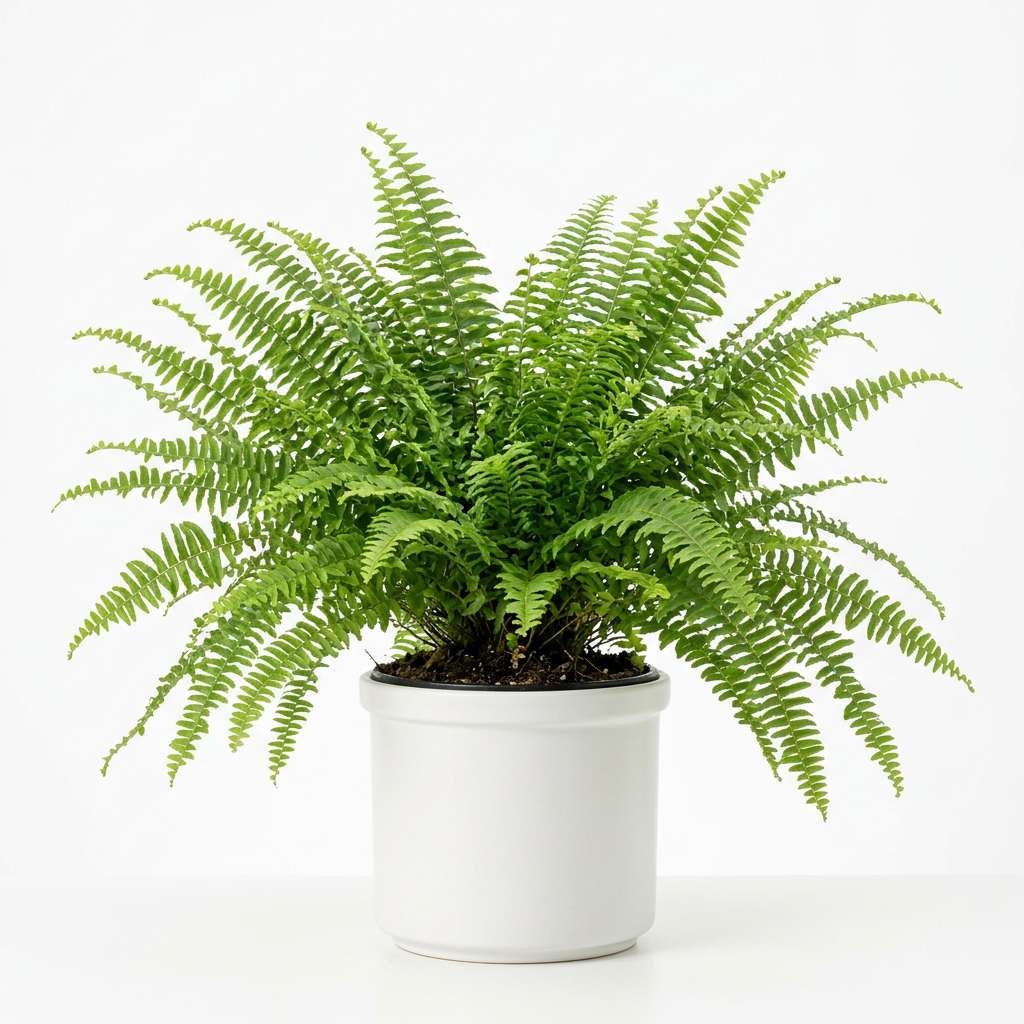
Boston Fern
ModerateNephrolepis exaltata
Boston ferns are lush, arching classics with cascading fronds that thrive in humid environments and add billowing elegance to bright, moist spaces.
Light
Bright indirect light
Water
Keep moist
Humidity
High (50–80%)
Temperature
60–75°F (15–24°C)
Toxicity
Non-toxic
Boston ferns are the grande dames of the houseplant world — lush, billowing, and unapologetically dramatic. With their long arching fronds and feathery leaflets, Nephrolepis exaltata brings a sense of wild, tropical abundance to any room lucky enough to meet their humidity requirements. They reward attentive care with vigorous growth and a timeless elegance that no artificial plant has ever convincingly replicated.
Quick Care Overview
| Care Factor | Requirement |
|---|---|
| Light | Bright indirect light |
| Water | Keep moist |
| Humidity | High (50–80%) |
| Temperature | 60–75°F (15–24°C) |
| Soil | Rich, well-draining peat-based or coco coir mix |
| Fertilizer | Balanced liquid fertilizer monthly during spring and summer |
| Toxicity | Non-toxic |
Light Requirements
Boston ferns thrive in the kind of soft, consistent light you’d find on a shaded porch or near a bright window with a sheer curtain. They’re not low-light plants — they need enough brightness to fuel their dense, rapid growth — but they’re equally intolerant of harsh direct rays that will scorch and crisp their fronds.
- Low light: Fronds thin out, growth slows dramatically, and the plant gradually loses its lush density over time
- Bright indirect light: The sweet spot — produces full, arching fronds and vigorous growth through the growing season
- Direct sun: Quickly scorches fronds, causing brown, papery tips and bleached-out coloring that won’t recover
A north- or east-facing window is ideal indoors. If your only option is a south or west exposure, set the plant back a few feet or filter the light with a sheer curtain.
Watering
Boston ferns like to stay consistently moist — think of the damp forest floor they’d call home in the wild. Check the soil every two to three days and water when the top half-inch feels dry to the touch. In warm weather or low-humidity environments, this can mean watering every two days; in cooler months, once or twice a week may be enough.
Water thoroughly at the soil level, allowing water to drain freely from the pot. Empty the saucer after 30 minutes to prevent the roots from sitting in standing water. Boston ferns have very little tolerance for drought — even a few days of bone-dry soil can trigger mass frond drop — but equally, waterlogged roots will rot quickly.
Signs of overwatering: Yellowing fronds, mushy stems at the base, a sour smell from the soil, and root rot if you unpot the plant
Signs of underwatering: Fronds curl inward, tips go brown and crispy, leaves drop in large numbers, and the soil pulls away from the pot edges
Popular Varieties
Boston ferns have been cultivated extensively, and a handful of cultivars are commonly found at garden centers:
- ‘Fluffy Ruffles’ — compact with tightly ruffled, dense fronds; great for smaller spaces
- ‘Dallas’ — a more tolerant cultivar that handles lower humidity and drier conditions better than the straight species
- ‘Rooseveltii’ — large, wavy fronds with a more dramatic, arching habit
- ‘Tiger Fern’ — an eye-catching variegated form with yellow-striped fronds
Humidity and Temperature
Humidity is the make-or-break factor for Boston ferns indoors. They need 50–80% relative humidity to look their best — the kind of air that most homes, especially in winter, simply don’t provide without help. A quality room humidifier placed nearby is the most effective solution. You can also set the pot on a pebble tray filled with water (keeping the base of the pot above the waterline), or group several plants together to create a more humid microclimate.
Boston ferns are happiest between 60–75°F (15–24°C) and don’t appreciate temperature extremes in either direction. Keep them away from heating vents, air conditioning drafts, and cold windowsills in winter — a blast of dry, heated air is one of the fastest ways to trigger frond drop. Temperatures below 50°F (10°C) will cause damage, and frost is fatal.
Soil and Potting
Use a rich, moisture-retentive mix that still drains well enough to prevent waterlogging. A quality peat-based potting mix or a coco coir blend works well, ideally with some perlite added (around 20–30%) to keep things airy at the roots. Avoid heavy, compacted soils that stay soggy.
Boston ferns grow vigorously and will need repotting every one to two years, typically in spring. Choose a pot only one size up — going too large invites root rot by holding more moisture than the plant can use. Terra cotta pots are a good choice because they breathe and help regulate moisture, though you’ll need to water more frequently.
Propagation
Boston ferns are most reliably propagated by division — their stolons (runners) naturally produce new plantlets, which you can separate and pot up independently.
- Choose a healthy, established plant that has multiple crowns or visible runners with small plantlets attached
- Remove the plant from its pot and gently shake off excess soil to expose the root structure
- Use clean, sharp scissors or a knife to separate individual crowns or rooted runners from the main plant, ensuring each division has a healthy root system and several fronds
- Pot each division into its own container filled with fresh, moist potting mix
- Water thoroughly and place the new divisions in a warm, humid spot out of direct sun
- Keep the soil consistently moist for the first few weeks while the divisions establish — consider enclosing them loosely in a clear plastic bag to retain humidity
Fertilizing
Feed your Boston fern with a balanced, water-soluble fertilizer (such as 10-10-10 or 20-20-20) diluted to half the recommended strength, once a month during spring and summer. Ferns are sensitive to fertilizer burn, so never feed at full concentration and always water the soil before applying liquid fertilizer to avoid root shock. Stop feeding entirely in fall and winter when growth naturally slows. Signs of over-fertilizing include brown leaf tips and a crust of white mineral deposits on the soil surface.
Common Problems
Brown, crispy frond tips: Almost always caused by low humidity or dry air from heating and cooling systems. Increase humidity with a humidifier or pebble tray, and move the plant away from vents.
Yellowing fronds: Most commonly linked to overwatering or inconsistent moisture — check the soil and watering routine first. It can also indicate low light or a nutrient deficiency if the plant hasn’t been fed in a long time.
Massive frond drop: Sudden leaf loss is usually a stress response — most often caused by a move to a drier environment, a cold draft, or letting the soil go completely dry. Restore consistent humidity and moisture and the plant should recover.
Scale insects: Look for small, brown, waxy bumps on the stems. Remove with a cotton swab dipped in rubbing alcohol; for serious infestations, treat with neem oil or insecticidal soap, applied carefully to avoid saturating the fronds.
Fungus gnats: A sign that the soil is staying too wet between waterings. Allow the top layer to dry out a bit more between waterings and use yellow sticky traps to catch adults.
Pale, washed-out fronds: Usually caused by too much direct sun. Move the plant to a location with filtered or indirect light.
Is Boston Fern Toxic?
Boston ferns are completely non-toxic to cats, dogs, and humans. They’re one of the safest houseplants you can own if you share your home with curious pets or small children. In fact, they’re often recommended specifically as a pet-friendly alternative to more toxic trailing plants. You can hang them in a basket, set them on a shelf, or display them at ground level without any worry.
With the right humidity and a reliably moist root zone, a Boston fern will reward you with cascading fronds that just keep growing — and there are few things in the plant world more satisfying than a truly happy fern in full swing.