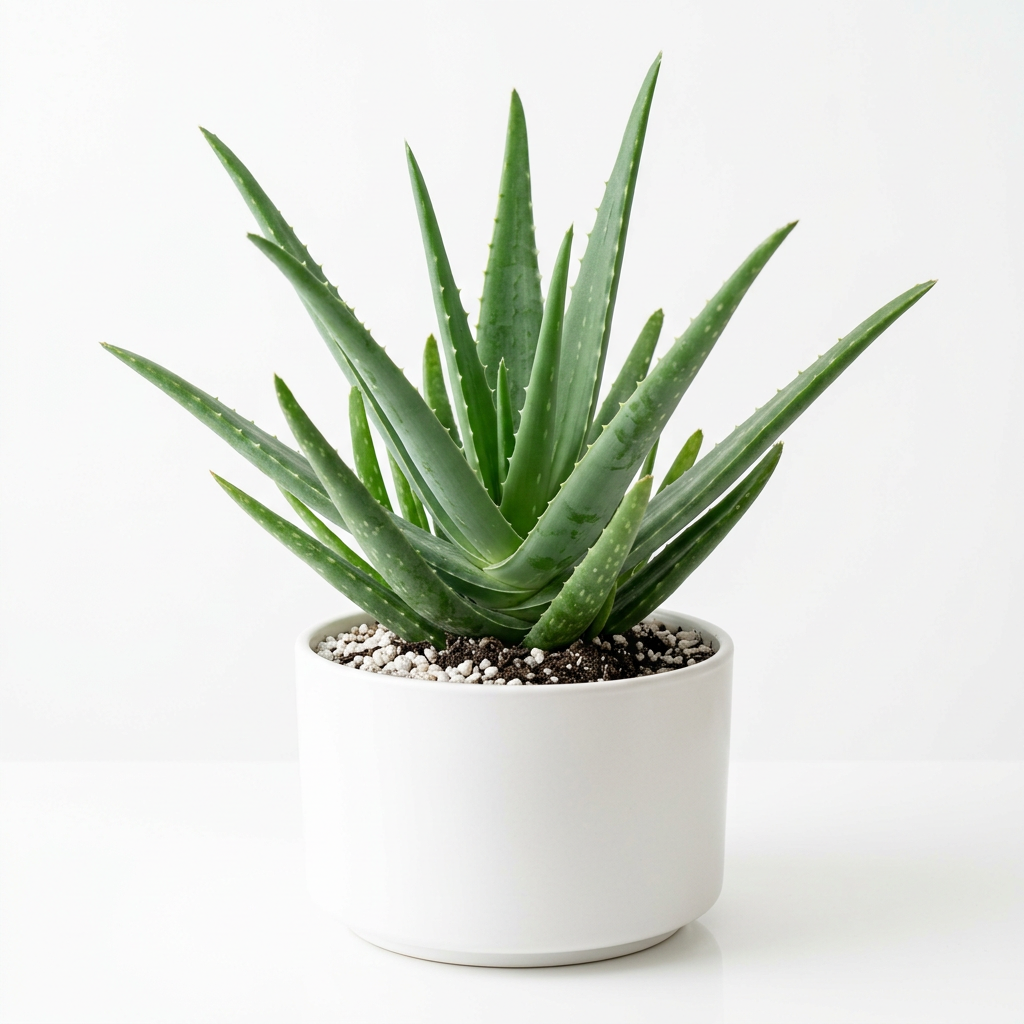
Aloe Vera
Very EasyAloe barbadensis
Aloe vera is the ultimate dual-purpose plant — striking succulent architecture plus a generous supply of soothing gel that belongs in every home medicine cabinet.
Light
Full sun to bright indirect light
Water
Every 2–3 weeks
Humidity
Low (20–40%)
Temperature
55–80°F (13–27°C)
Toxicity
Toxic to pets
Aloe vera is one of those plants that earns its spot in your home twice over — first as a sculptural, no-fuss succulent that looks great on any sunny windowsill, and second as an on-demand first aid kit you can actually harvest from. It’s forgiving enough for complete beginners, yet interesting enough that seasoned plant collectors always seem to have one around. Once you understand its one non-negotiable (no soggy soil, ever), Aloe barbadensis practically takes care of itself.
Quick Care Overview
| Care Factor | Requirement |
|---|---|
| Light | Full sun to bright indirect light |
| Water | Every 2–3 weeks |
| Humidity | Low (20–40%) |
| Temperature | 55–80°F (13–27°C) |
| Soil | Fast-draining cactus or succulent mix |
| Fertilizer | Once in spring, once in summer (diluted to half-strength) |
| Toxicity | Toxic to pets |
Light Requirements
Aloe vera is a sun worshipper at heart — it evolved in the arid regions of the Arabian Peninsula and thrives with as much light as you can give it. A south- or west-facing windowsill is the sweet spot indoors. Plants that don’t get enough light will slowly stretch and lean toward the source, producing pale, floppy leaves that lose the plant’s characteristic tidy rosette shape.
- Low light: Growth slows dramatically, leaves become pale green or yellowish and may grow thin and floppy; the plant survives but won’t thrive
- Bright indirect light: Healthy, steady growth with firm, upright leaves in a rich green — a solid indoor setup
- Direct sun: Ideal when acclimated gradually; leaves take on a healthy blush or slight bronze tint, and the plant grows at its best pace (sudden exposure can cause sunscorch — pale or brown patches on leaves)
Watering
Aloe vera stores water in its thick, fleshy leaves, which means it can handle serious drought — but it cannot handle wet feet. The rule of thumb: water thoroughly, then wait until the soil is completely dry before watering again. In spring and summer that typically means every 2–3 weeks; in fall and winter, once a month or even less is plenty. Always water at the soil level rather than overhead, and make sure excess water drains freely from the pot — never let aloe sit in a saucer of standing water.
Signs of overwatering: Soft, mushy, or translucent leaves (especially at the base); brown rot at the stem; soggy soil that never seems to dry out; a foul smell from the pot
Signs of underwatering: Leaves that are thin, shriveled, or curling inward along their length; dry, pulling-away-from-pot soil; a generally deflated look to the whole rosette
Popular Aloe Varieties
While Aloe barbadensis (true aloe vera) is by far the most common, a few other aloe species and cultivars regularly show up in garden centers and are worth knowing:
- Aloe vera ‘Sunrise’ — a compact cultivar with a warm orange-red blush in bright light, well-suited to smaller pots
- Aloe aristata (Lace Aloe) — a smaller, cold-hardier species with white-spotted leaves and soft teeth along the margins; great for terracotta collections
- Aloe maculata (Soap Aloe) — spotted green leaves in a flattened rosette; produces vivid orange-red flowers and offsets prolifically
- Aloe ‘Christmas Carol’ — a popular hybrid with red-tipped, heavily spotted leaves that color up beautifully in strong light
Humidity and Temperature
Aloe vera is perfectly at home in the dry air of most heated or air-conditioned homes — it actually prefers low humidity in the 20–40% range and has no need for misting, pebble trays, or humidifiers. Keep it in temperatures between 55–80°F (13–27°C) for best growth. It can tolerate brief dips toward the lower end of that range, but prolonged cold below 50°F (10°C) will damage the leaves, and frost is fatal. If you move your aloe outdoors for summer (highly recommended — it loves it), bring it back inside before nighttime temps drop below 55°F (13°C) in autumn.
Soil and Potting
Drainage is everything with aloe. Use a commercial cactus and succulent mix, or blend standard potting soil with coarse perlite or grit at roughly a 1:1 ratio. The goal is a mix that dries out quickly and never stays damp for more than a day or two after watering. Terra cotta pots are ideal because they wick moisture away from the roots — if you use glazed ceramic or plastic, be especially conservative with watering.
Repot every 2–3 years, or whenever the plant becomes root-bound or produces so many pups that the pot looks overcrowded. Choose a pot only one size up — too much extra soil around the roots holds excess moisture and invites rot. Spring is the best time to repot.
Propagation
Aloe vera propagates readily through offsets (pups) — the small rosettes that sprout from the base of a mature plant. Division is far more reliable than seed for home growers.
- Wait until pups are at least 2–3 inches tall and have developed their own visible roots at the base.
- Unpot the mother plant and gently brush away soil to expose where the pup attaches to the root system.
- Use clean, sharp scissors or a knife to sever the pup from the mother, keeping as many roots on the pup as possible.
- Let the cut end of the pup callous over in a dry spot for 24–48 hours — this reduces the chance of rot when planted.
- Plant the pup in a small pot with fresh succulent mix, press the soil lightly around the base, and hold off watering for 1 week.
- After the first week, water lightly and place in bright indirect light. Roots will establish over the next few weeks before the plant takes off.
Fertilizing
Aloe vera is a light feeder and doesn’t need much to stay healthy. Fertilize once in early spring and once in midsummer with a balanced liquid fertilizer (10-10-10 or a formula designed for cacti and succulents) diluted to half the recommended strength. More frequent feeding can cause salt buildup in the soil and actually stress the plant. Skip fertilizing entirely in fall and winter when the plant is resting.
Common Problems
Brown, mushy leaves (especially at the base): Classic overwatering and root rot. Remove the plant from its pot, trim away any black or brown mushy roots, let it air dry, and repot in fresh dry succulent mix. Hold off watering for 1–2 weeks.
Leaves turning pale yellow or white: Usually too much direct sun too fast (sunscorch), or conversely, too little light causing chlorosis. Check which side the discoloration is on — sun-facing patches suggest scorch; overall pallor suggests insufficient light.
Leaves becoming thin, wrinkled, or curling: The plant is thirsty. Give it a thorough watering and it should plump back up within a few days.
Brown leaf tips: Common causes include fluoride sensitivity (switch to filtered or rainwater), low humidity combined with heat, or fertilizer salt buildup. Flush the soil thoroughly with water a couple of times a year to clear accumulated salts.
Leggy growth with leaves reaching toward the light: Insufficient light. Move the plant to a brighter spot — ideally a south-facing window or under a grow light.
Pests (mealybugs, scale): Aloe is relatively pest-resistant but can attract mealybugs in the crevices between leaves. Wipe affected areas with a cotton swab dipped in 70% isopropyl alcohol, or treat with neem oil. Check new plants carefully before adding them near established ones.
Is Aloe Vera Toxic?
Despite aloe gel’s well-known reputation for soothing burns and skin irritation in humans, aloe vera is toxic to cats and dogs. The culprit is a compound called saponin (and to a lesser extent anthraquinones) found in the latex layer just beneath the leaf skin — if a pet chews on aloe leaves, it can cause vomiting, diarrhea, lethargy, and in larger amounts, more serious symptoms. Keep aloe plants out of reach of pets, and if ingestion is suspected, contact your veterinarian or the ASPCA Animal Poison Control Center. The plant is generally considered safe for adult humans when the gel is used topically.
Aloe vera rewards a relaxed approach — give it plenty of light, water it less than you think it needs, and it will reward you with decades of easy beauty and a steady supply of gel whenever you need it. It’s one of the few plants that genuinely gets better with a bit of benign neglect.